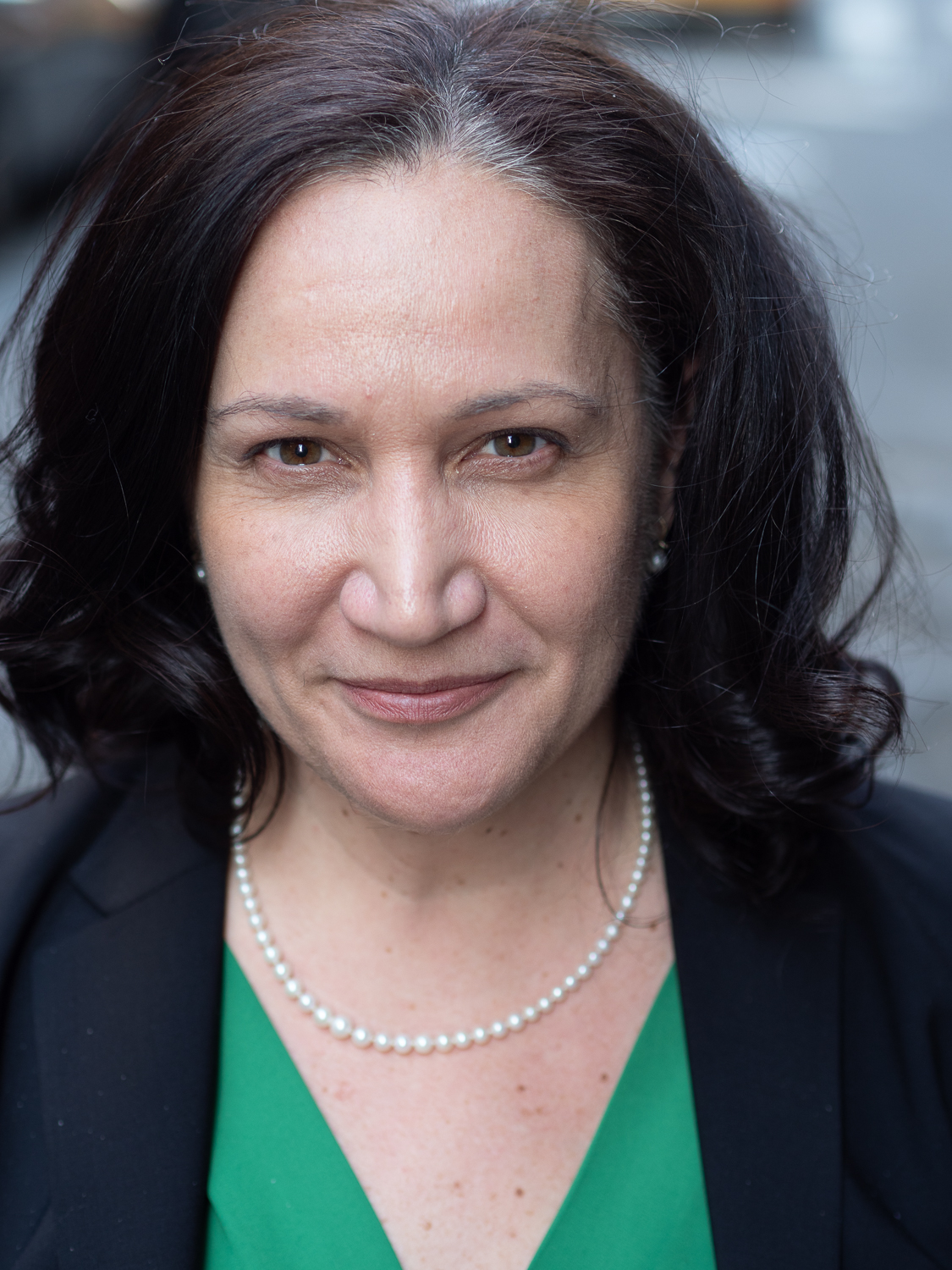
Please join FJC in welcoming Gabrielle Tran, who began her role as Program Assistant this fall. Gabi is a recent graduate of Rutgers University where she earned a B.S. in Public Health with high honors. She has demonstrated a deep commitment to the nonprofit sector, interning at organizations like American Cancer Society and Cancer Support Community, as well as helping start up Welcome to Chinatown, a grassroots initiative to support Chinatown businesses following the rapid decline in business as a result of COVID-19 and increased xenophobia. Gabi will be working on our Fiscal Sponsorship Program, providing operational support to over 140 organizations and programs under FJC’s 501(c)(3) umbrella.
A DAF Sponsor Mobilizes Resources for the Nonprofit Sector
Part Two of the Nonprofit Lowdown podcast featuring CEO Sam Marks (air date: March 12, 2020)
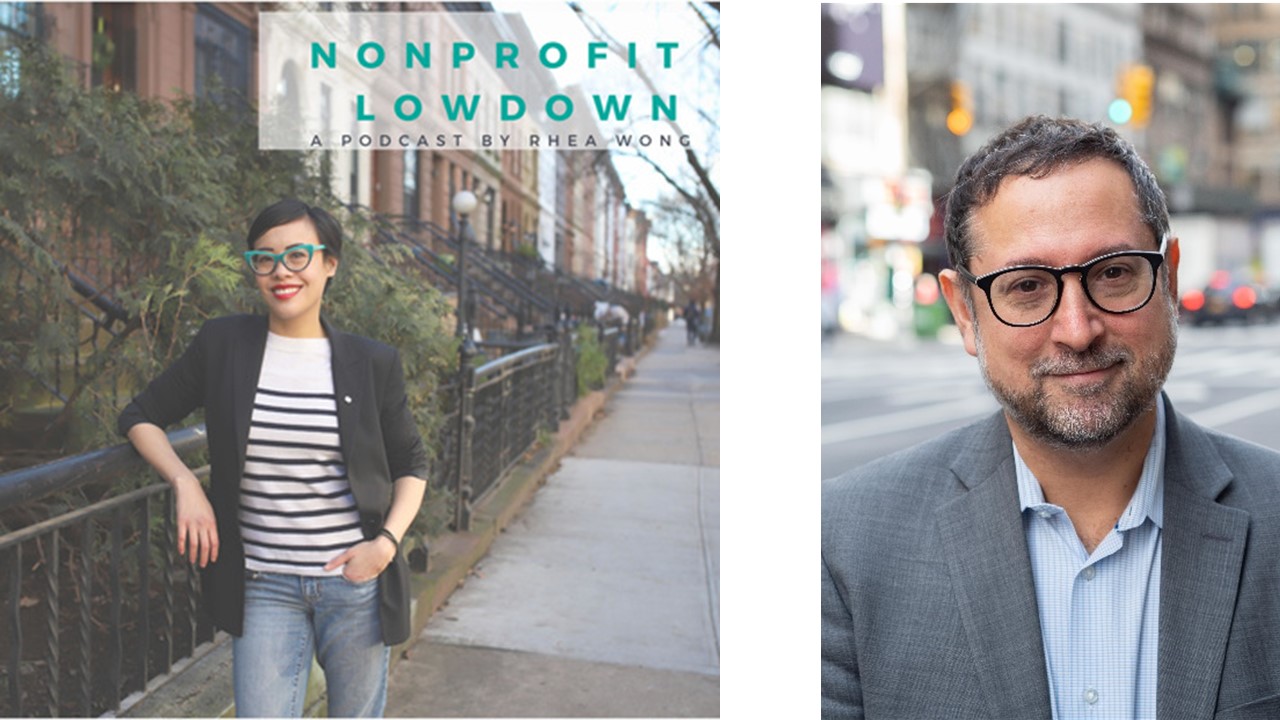
In November 2019, Sam Marks, Chief Executive Officer of FJC, was interviewed for the podcast Nonprofit Lowdown with Rhea Wong. The interview was a reunion of sorts for these two, as Sam was Rhea’s first boss in 1999 when she worked at Summerbridge at the Town School (now known as Breakthrough New York, an organization Rhea later ran for over a decade).
Part One of this interview focuses on Sam’s professional journey from his early years in youth development and education to “the dollars and cents side” of the nonprofit sector.
Part Two of the interview focuses on his particular vantage point at FJC, and covers Donor Advised Funds, nonprofit lending, and fiscal sponsorships.
The interview has been condensed and edited for clarity.
So now you’re the CEO of FJC. What is that and what do you do?
FJC is a foundation, primarily comprised of Donor Advised Funds or DAFs. The way a DAF works is, you set up an account, you move money into it. That money becomes legally the asset of FJC. The donor gets the full tax benefit of making that donation. But the donor can recommend two things: how that money is invested over time, similar to a foundation endowment. We provide donors with a menu of investment options like stocks and fixed income. They can also recommend how those funds are turned into grants to nonprofit organizations they care about.
“The [DAF] donor can recommend two things: how that money is invested over time, similar to a foundation endowment, and how those funds are turned into grants to nonprofit organizations they care about.”
You have another part of the house so to speak. Explain the investment side.
The investment side is how we steward the assets of our donors over time. Donors can choose to put it in stocks or bonds. There are some donors, if they’re big enough, they can bring a hedge fund or an alternative investment onto our platform. But one of the most popular ways is our impact investing opportunity, FJC’s Agency Loan Fund, which is a pool of donor capital that is deployed as loans to nonprofit organizations. So it’s great for the donors, because their money can be put to work in the community, supporting the missions of organizations. The principal and interest payments come back to their accounts, so those accounts can grow. They can still make grants with them, but in the meantime, that money is being lent to a full gamut of organizations. Our borrowers are making energy efficiency improvements in buildings, doing homeless services, arts organizations, and more.
Why would a nonprofit organization be interested in taking out a loan?
It’s typically to bridge some kind of commitment. If you have a city or state contract for services, and you’re working with youth afterschool or doing foreclosure counseling, it’s great to have that contract but you can’t pay the bills with a contract. You can only pay the bills with cash. Many city and state contracts for various reasons take a long time to pay. So many of the nonprofits that come to us have an urgent cash flow need, and we’re a pretty nimble, flexible organization. We can turn a decision around about a loan in just a couple or three weeks. A lot of nonprofits find that to be a critical service to even out their cash flow, make payroll, or pay their vendors.
What do you look for when you’re making a loan?
The types of organizations we work with are a range of sizes and missions, but they have to be credit-worthy. That means they have to have some experience, not necessarily being a borrower (a lot of our borrowers have never borrowed money before), but they have to have some ability to have an informed conversation about their finances and their plan to repay the loan. Typically, we’re bridging a city or state contract, or a capital grant. They have to be able to understand their business well enough to say how they are going to pay it back.
They will also need some kind of collateral. In some cases that can be a piece of real estate that we can secure the loan, but other times they may be able to provide a guarantee. Perhaps a guarantor on their board or some other asset that can serve as collateral.
Is there a general size of loan that you’re looking at?
It runs the gamut. We’ve made loans as small as $10,000 and as high as $4 million. Above $4 million we sometimes work with a co-lender or two. So we’re pretty flexible.
“[FJC’s Agency Loan Fund] is great for the donors, because their money can be put to work in the community, supporting the missions of organizations. The principal and interest payments come back to their accounts, so those accounts can grow.”
What other lending options are there out there for nonprofits?
There are banks and credit unions. There are banks with very focused nonprofit business lines like Amalgamated Bank or M&T. There are also community development financial institutions, or CDFIs. Examples include LISC, where I used to work, Nonprofit Finance Fund, Low income Investment Fund, and many others. These are specialized nonprofit lenders. They are nonprofits themselves, and they lend to nonprofits. They tend to focus more on capital projects, like affordable housing or community centers. They tend to lend secured against real estate, though not always. The Fund for the City of New York will also lend against city contracts. So there is an ecosystem that serves this niche.
“We’re a good [lending] option for organizations whose needs are maybe a little bit more urgent, and we can be pretty flexible and nimble about getting to yes.”
Why would an organization choose to approach you for a loan, as opposed to getting a line of credit from a bank?
Bank loans are probably going to be a little bit cheaper, if you can get one. The reason we are competitive is that we are very fast and nimble in terms of our decision making. We’re a pretty small outfit. A bank or larger institutions may have credit committees and layers or approval processes, and they may have people making decisions about loans that don’t particularly know about the nonprofit sector. They might not be comfortable with a city or state contract acting as repayment source. But we know the nonprofit sector really well, and we can get to a decision pretty quickly.
If a nonprofit has enough lead time and relationships at a bank, maybe they keep their deposits there, if they can make a line of credit work, they should definitely do that. We’re a good option for organizations whose needs are maybe a little bit more urgent, and we can be pretty flexible and nimble about getting to yes.
What else should nonprofits consider if thinking about taking out a loan? What else do you look for in deciding if a nonprofit is ready for a loan? Do they need to have a CFO?
Nonprofit organizations can get to that level of sophistication in a lot of different ways. It can be an Executive Director or a Board Member where that expertise sits. There are organizations that become big and complex enough, where the business fundamentals include different revenue sources like earned revenue, grants and multiple city and state contracts. Then the cash flow forecasting gets to be more complicated. You might have an investment portfolio. In those cases we often see organizations with CFOs. We see a lot of organizations starting to outsource their CFO function. There are companies like BTQ Financial that work with a lot of organizations we know. FMA is another one. So there are a lot of different solutions that are tailored to nonprofits.
I should mention also, another part of our business is fiscal sponsorships. These are with organizations that are earlier in their life cycle. These are organizations that don’t have their own 501(c)(3) status. They want to get donations but they don’t have that IRS determination letter yet. We can act as the 501(c)(3), we can accept grant payments, we can pay their vendors and provide them with some pretty basic accounting of their income and expenses. We have about 160 organizations we work with. We are set up to do that because having DAFs, we’re set up to be accepting money and getting payments out in a pretty rapid way, so those capabilities fit well with a fiscal sponsorship program.
“[Our fiscal sponsorship program works with] organizations that are earlier in their life cycle. They want to get donations but they don’t have that IRS determination letter yet. We can act as the 501(c)(3).”
What’s the cost of your fiscal sponsorship program?
Our fiscal sponsorship program is pretty reasonably priced. It’s generally 4-6% of inbound donations (plus 1% annually on the average daily balance). And the reason why we’re reasonable is that we’re a pretty bare-bones fiscal sponsorship program. Other organizations will provide a lot more types of services or technical assistance. We engage with our organizations a lot and give them a lot of advice and contacts but it’s done in a more informal way.
Part One of this interview focuses on Sam’s professional journey from his early years in youth development and education to “the dollars and cents side” of the nonprofit sector.
For an audio version of this interview (and dozens of others with nonprofit leaders), check out Nonprofit Lowdown, Rhea Wong’s fabulous podcast, where she reviews and recommends the best ideas, resources, tools, tricks and tips to “run your nonprofit like a pro!”
A Generalist Encounters Nonprofit Finance
Part One of the Nonprofit Lowdown podcast featuring CEO Sam Marks (air date: March 12, 2020)
Part One of this interview focuses on Sam’s professional journey from his early years in youth development and education to “the dollars and cents side” of the nonprofit sector.
Part Two of the interview focuses on his particular vantage point at FJC, and covers Donor Advised Funds, nonprofit lending, and fiscal sponsorships.
The interview has been condensed and edited for clarity.
So what is it that you do?
I’m the CEO of a foundation called FJC. It’s been around about 25 years. It has over $300 million under management across about 1,000 accounts. As a sponsor of Donor Advised Funds, it’s almost it’s like we have a thousand little mini-foundations under our roof. I sort of sit at the intersection of supporting the nonprofit sector and financial services industry and global financial capital flows.
When I first met you, you were an education guy and a teacher. Now you’re like this quasi-finance guy. What happened?
I am even more surprised than you to find myself doing this work and thinking so much about the dollars and cents and the financing side of the nonprofit sector. But I haven’t left behind that commitment to youth development and community development and impact and all of the things we want the nonprofit sector to do. I’ve had this interesting path where I’ve been increasingly exposed to how the money part of the sector works.
I think it started when Summerbridge was hosted back in the 1990s and 2000s at The Town School, and the first exposure I had to the money side came with one of my favorite staff people, Linda Larkin, the business manager at Town. She was an amazing mentor to me. I had my own little mini budget to manage within the context of Town School’s budget, and she was the first person who explained to me, when you buy pencils and paper and crayons, that’s an expense. When you buy a chair or a desk, you’re purchasing an asset, something you’re not going to consume over a year, and we’re going to depreciate it over time. And that was a lightbulb to me like, Oh there’s a whole industry of people and an expertise set to help nonprofits figure out how to intersect with audit and finance.
When I went to graduate school at the Harvard Kennedy School, I took a great class with Christine Letts who was a professor in nonprofit management. She asked us to look at audited financial statements, climb inside them, look at the balance sheet, income statement, cash flow, because those documents could help you tell a story about the organization, to connect the mission to the operations and with the way money came in and out. It was another way to analyze an organization, and it became a fundamental skill set in my career.
“I am even more surprised than you to find myself doing this work and thinking so much about the dollars and cents and the financing side of the nonprofit sector.”
At the core when you look at the financial statements you really understand what the organization values and prioritizes.
Absolutely! And when you’re doing due diligence on the lending side, having audited financial statements means there’s a third party coming in with a set of Generally Accepted Accounting Principals and you’re able to separate the story someone’s telling you from what’s actually happening in the organization. When those things don’t match up, that can be a red flag.
So you went to grad school, you found out financials could be super fun, and then what happened?
While I was in graduate school I found myself gravitating to the part of the nonprofit sector involved in affordable housing and community economic development. I became focused on issues of inequality, the differences among neighborhoods in New York City, where I grew up, and how nonprofits could best intervene to address issues of inequality. The affordable housing sector was fascinating because it was the place where community investment, government, financial institutions, the public sector, and nonprofits were all collaborating to advance a public agenda. When I was first stepping into it, I was more interested in the softer side, the programmatic side, the urban planning aspects, the pieces that appealed to a more generalist skill set. But at the end of the day, the financing and the analysis about project feasibility was where the action was. And the decision makers driving resources into cities and neighborhoods really had to develop that skill set.
I came out of graduate school, landed at WHEDCO, a nonprofit in the South Bronx that was focused on housing and economic development. And from there I went to Deutsche Bank. I spent 7 years in the Community Development Finance Group. I got to focus on lending, investing, program related investments (which are below market rate loans) and I got to straddle the foundation side as well, making grants to community based organizations. So it was a whole range of capital from grants, to loans, to equity investments and how to tailor the right type of capital to the right problems in the communities.
“[Analyzing audited financial statements] could help you tell a story about the organization, to connect the mission to the operations and with the way money came in and out. It was another way to analyze an organization, and it became a fundamental skill set in my career.”
You talked about organizations that use financial analysis to connect mission to operations. Can you explain with an example?
I’ll give you a great example from my own experience. After I left Deutsche Bank and before I came to FJC, I spent about five years running the New York City local office of Local Initiatives Support Corporation (LISC). LISC is a national organization that brings financing and technical assistance to low-income neighborhoods all over the country. When I started at the NYC office, LISC was in the middle of a major set of programs that we implemented after Hurricane Sandy. We had an infusion of both private and public sector dollars, and these were time-limited programs and we knew that money was going to come to an end. So when I came in, I knew I had a two-year runway, maybe three if the contracts were extended, and we knew that we had to do a deep dive on our business model and figure out what was making money and what wasn’t. We had a team of lenders that were making loans to nonprofits, we had a team that were designing and implementing programs around commercial corridors and a whole bunch of other things. It was a very complex organization.
So I climbed into the organization with the help of my finance director Wilber Gonzalez, an amazing guy with amazing skills in Excel. Working with senior management, we looked at every single program that we were running, and we looked at all the grants that were attached to those, we looked at all the revenues attached to all the various programs, and then we looked at our costs. And primarily the costs were our people power. We had a staff of 15 people, and we began to estimate the percentage of each’s person’s time on each program, and we were able to create an analysis that helped us look at what pieces of our work were earning money, what was in the black, what was in the red. That didn’t mean we were going to just shut down the money-losing programs, but it meant that we had much better handle on the true costs of running each of our program lines. And that influenced our way of thinking about how we fundraise. It made us understand that even though our lending was earning revenue, that scale of activity wasn’t going to be enough to have the whole organization operating in the black. We said, hey that’s important data, we can increase our lending but we also need to spend more time on fundraising, and making our annual gala bigger and better. That would have a bigger impact on our bottom line than trying to just double our lending. The process helped us make some strategic decisions we couldn’t have done without the data.
Check out Part Two of the interview, which focuses on his particular vantage point at FJC, and covers Donor Advised Funds, nonprofit lending, and fiscal sponsorships.
For an audio version of this interview (and dozens of others with nonprofit leaders), check out Nonprofit Lowdown, Rhea Wong’s fabulous podcast, where she reviews and recommends the best ideas, resources, tools, tricks and tips to “run your nonprofit like a pro!”
FJC Welcomes New Board Members
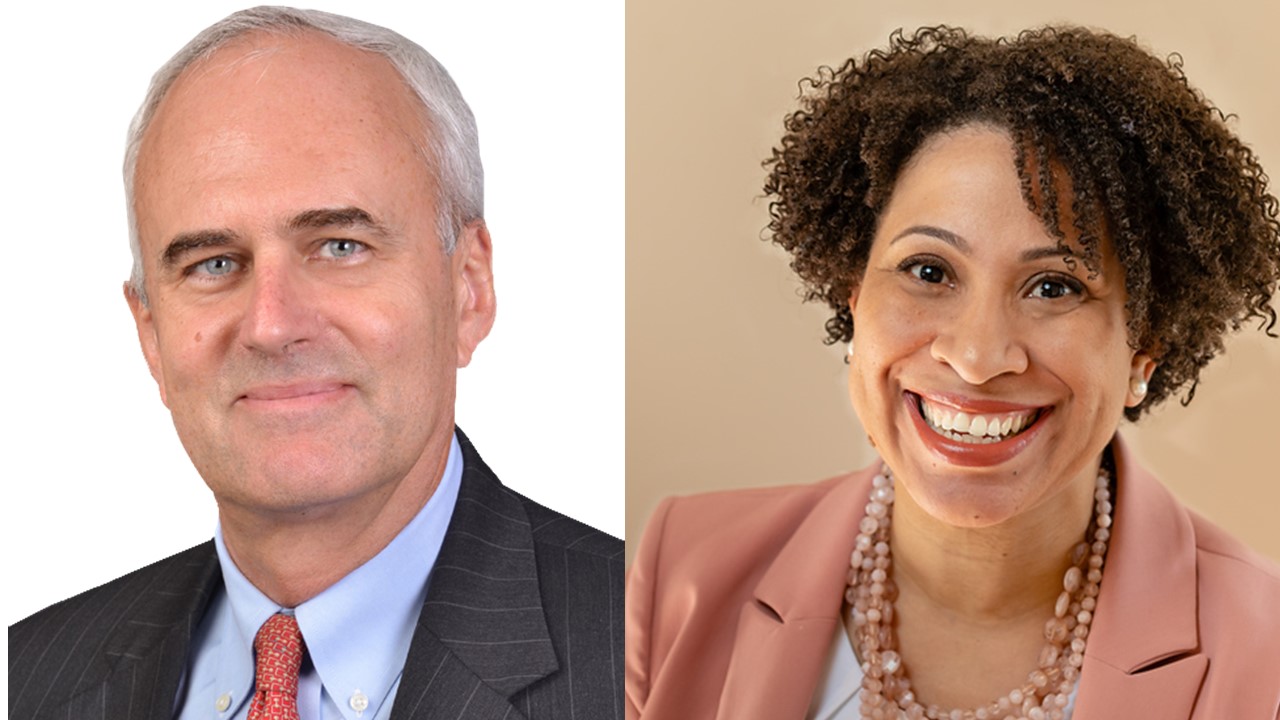
FJC – A Foundation of Philanthropic Funds announced the appointment of Gary W. Finger and Amber M. Randolph to its Board of Directors, effective January 1, 2020. The Board provides critical governance and oversight functions to FJC, a public charity that provides total management of charitable giving and offers a diverse menu of philanthropic services, including Donor Advised Funds and fiscal sponsorships.
Gary W. Finger is currently a Senior Advisor in the Corporate Finance Group of Houlihan Lokey. He specializes in advising companies on public and private mergers and acquisitions transactions, particularly in activist shareholder situations. Mr. Finger has a distinguished career in the investment banking industry, having previously served with Morgan Stanley, EF Hutton, and Bear Stearns. Mr. Finger will serve on the Board’s investment committee, which sets policies for responsible management of FJC’s assets, including the selection of investment managers and the investment options available for Donor Advised Fund (DAF). He will also serve on the grants committee, which approves grants to charitable organizations that are recommended by FJC donors.
Amber M. Randolph currently serves as Senior Vice Chancellor for Administration, Economic Development and Chief Financial Officer of Rutgers University-Newark, with a portfolio that includes financial management and planning, campus planning and facilities, real estate, and the university’s engagement with the surrounding community. Prior to her position at Rutgers, she held positions at various institutions at the intersection of community development, impact investing, and the nonprofit sector, including Low Income Investment Fund, Primary Care Development Corporation, and Deutsche Bank’s Community Development Finance Group. Among other responsibilities, Amber will serve on the Board’s Fiscal Sponsorship Program Committee, which provides final approval of applications from nonprofit projects or organizations that are seeking fiscal sponsorship by FJC awaiting approval of their tax exempt 501(c)3 status from the Internal Revenue Service.
Please join us in welcoming Regina A. Rodriguez as FJC’s new Chief Financial & Investment Officer, effective December 1, 2019. Ms. Rodriguez most recently held the position of Director of Finance at the Long Island Children’s Museum and previously acted as Controller at the Solomon R. Guggenheim Foundation. Ms. Rodriguez came to the nonprofit sector following over a decade in various accounting firms.
Following a nationwide search, the Board of FJC – A Foundation of Philanthropic Funds announced their selection of Sam Marks as the foundation’s Chief Executive Officer.
Mr. Marks comes to FJC from the Local Initiatives Support Corporation (LISC), the national community development nonprofit that brings financial and technical resources to local partners that implement affordable housing, economic development, and public health initiatives in low- and moderate-income communities. Prior to LISC, Mr. Marks was Vice President of Deutsche Bank’s community development group, where he oversaw grants, program-related investments, and underwrote the bank’s community development loans and investments. He previously held positions at nonprofit organizations Breakthrough New York and WHEDCo, and has served on several nonprofit boards.
Lorin Silverman will remain the President and Chair of FJC’s Board.