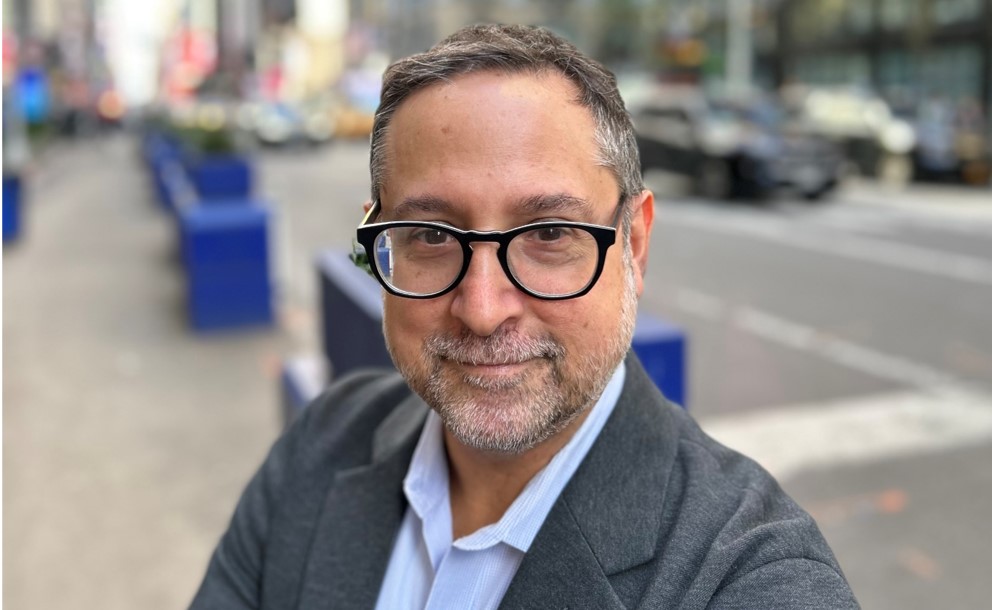
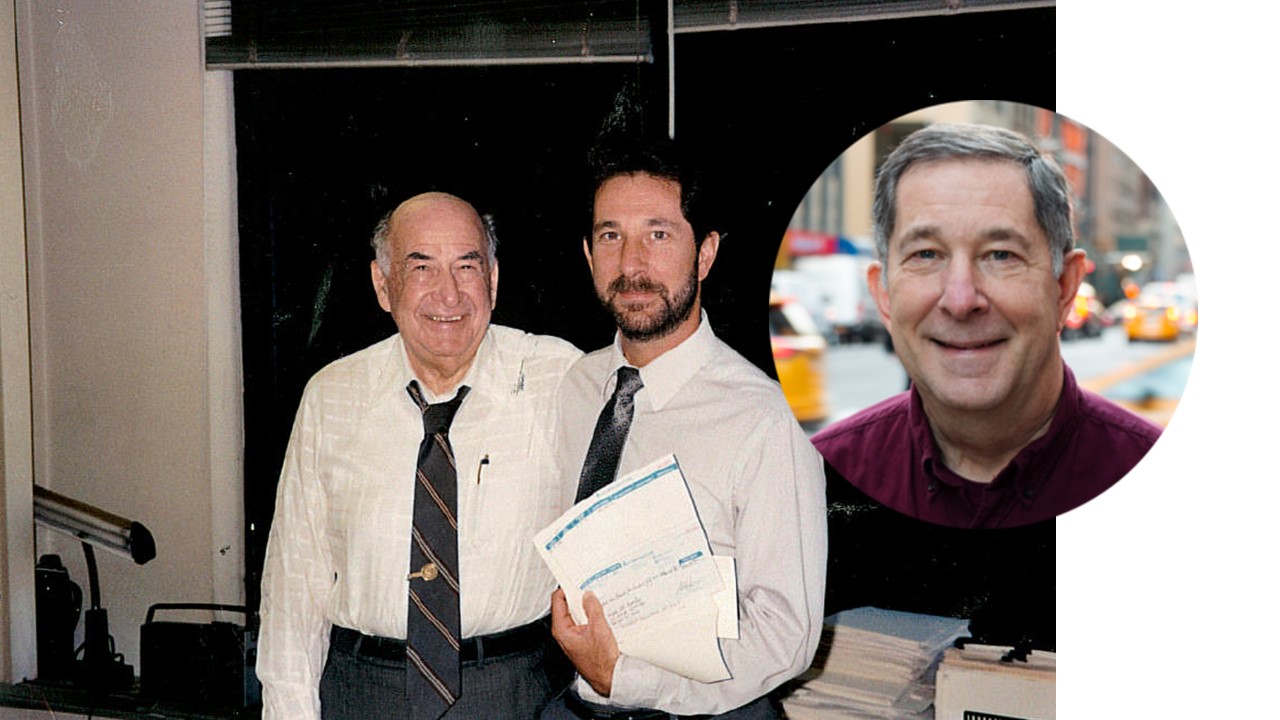
The late Marty Silverman, a founder of FJC, with Mark Cohen in the early 1990s.

From Accidental Beginnings, A Career in Nonprofit Innovation

A reflection by our outgoing Chief Legal Officer, Mark Cohen.

At the end of this year, I will retire from my role as FJC’s Chief Legal Officer, a position that has been the defining role of my 47-year legal career.  I am well aware it’s no longer quite in fashion to spend one’s career at one company or organization.  Young people in particular move around a lot.  I may have stayed in one place, but because the job has been so interesting, varied, and challenging, I’ve never stood still.

I never expected to be the chief lawyer of a nonprofit, much less a foundation of donor advised funds.  In 1977, shortly after I graduated from law school and had spent a year in a judicial clerkship, I landed a somewhat conventional corporate legal job at a company providing back-office services to Wall Street securities firms and government agencies. By 1984, that company started to have problems and eventually folded, and by happenstance I mentioned my plan to start looking for a new job with an old law school friend whose family became one of the founding donors that started FJC.  Those founders offered me a job as an attorney in their commercial business in 1985.  After FJC was formed in 1995, they began to invite me to FJC Board Meetings on a purely volunteer basis, where I dutifully took minutes and prepared resolutions.  As my role with FJC evolved and deepened, one of the Board Members, a lawyer, noticed how much work I was doing and said, “You know, we should probably put Mark on the payroll, so the organization’s books reflect his time and effort.”  And so in 2000, my formal role with FJC began.

I never expected to be the chief lawyer of a nonprofit, much less a foundation of donor advised funds.

From these modest and rather accidental beginnings, I could not have imagined how creative and all-encompassing my work with FJC would become, enough to fill a career. 

From its early days, FJC was focused on innovative uses of philanthropic dollars, particularly investing donor funds in loans to nonprofits.  Early on we provided bridge loans to nonprofits that were building group homes for adults with development disabilities.  Following the expose by Geraldo Rivera about the notorious Willowbrook facility on Staten Island, New York State began shutting down large warehouse institutions with the intention of opening up smaller and more humane group homes that were better integrated into their communities.  The challenge for our nonprofit partners was that capital funding from the state agency was only available on a reimbursement basis.  The nonprofits essentially had to spend the money before they had it.  These were some of the first bridge loans we made from our Agency Loan Fund, and we were able to facilitate dozens of new group homes.

I remember when FJC started the Agency Loan Fund, we required our donors to invest 10% of their account holdings in the loan pool. After all, we had no track record, and we weren’t sure they would invest their funds willingly.  But after we began to have solid performance on our loan portfolio and the benefits to the nonprofit community became evident, it became a popular and unique offering, something that set us apart from some of the “plain vanilla” although sometimes larger DAF sponsors. I believed that those other DAF sponsors were more often interested in keeping their clients’ money captive than in benefiting the nonprofit community, which was one of FJC’s major reasons for existence. 

In many respects working on the loan program was like working for a bank lending department.  I had never done that.  I began to feel like I was in a batter’s box with a pitching machine.  The balls kept coming.  We made loans to nonprofit theaters, museums, social service agencies, charter schools, and a lot of public television and radio stations. At last count, we have made over 350 loans  of more than $370,000,000 to a wide variety of nonprofit organizations in furtherance of their missions. Donors began coming to us with their own ideas about nonprofits they wanted to finance with their DAF accounts, whether it was for bail funds, clean energy, or—just recently—refinancing the bonds used to finance the Lower East Side Tenement Museum. When some donors wanted us to make loans to organizations that couldn’t meet our credit standards, we came up with the customized loan program to allow donors to recommend the terms of the loans and treat them as investments in their DAFs. 

Our fiscal sponsorship program has also really been a model of innovation. I can’t count the number of organizations that we fostered that went on to become nonprofits in their own right. Hopefully that spirit of innovation and expectation of trying to help the nonprofit community will continue.

The part of the job I love most: trying to come up with new solutions to new problems, to help nonprofit practitioners get the work done.

Working in the nonprofit sector, I’ve always been somewhat amazed and enamored of the fact that there are so many people who are truly devoted to enriching the lives of the underprivileged and underserved.  Most people I work with have worked so hard and so long.  Like me, many have been in their positions for decades.  I’m fairly certain they could have made a lot more money in the private sector, but they are truly committed to their organizations and the communities they serve.  Because of that, it’s always been a pleasure to see if we could help them along with their missions.

After so many years at FJC it’s hard to imagine being out of the day-to-day decision-making of the organization.  It’s a tough personal choice to retire, but my wife and I want to devote more time to our grandchildren, and we want to travel more. But I’d love to stay involved.  Otherwise, I’ll miss the thought-provoking part of the job I love the most: trying to come up with new solutions to new problems, to help nonprofit practitioners get the work done.  That has always been a great pleasure, and the highlight of my career.

Inside Philanthropy: Using DAFs Creatively to Solve Nonprofit Problems

We invite you to read this guest essay by CEO Sam Marks published in Inside Philanthropy.  The article suggests that “this is a time to experiment with deploying philanthropic dollars more strategically to help nonprofits address those issues more effectively and spend more effort on mission-critical work.”

The essay recommends that donors look beyond grantmaking for their philanthropy and consider other approaches to using philanthropic capital.  Examples cited include the revolving predevelopment fund FJC arranged for the Fortune Society, and the refinancing of the Tenement Museum’s mortgage through a DAF investment.

From the essay:

The conversation between philanthropy and nonprofits very often begins and ends with grantmaking, and there is no question that grants are a key component of nonprofit business models. But the nonprofit sector could surely benefit if this conversation were more expansive — on both sides. Nonprofit practitioners could be more explicit with their philanthropic partners about their cash flow challenges that distract senior management from a full focus on their missions, or the capital resources they need to grow and be truly transformative. Donors could consider more inventive and mission-focused uses of the philanthropic dollars that are currently invested in the private sector, whether in foundation endowments or in DAF accounts. These approaches depend on donors and nonprofits engaging more deeply and finding a common cause.

Simply put, there’s an opportunity to grow beyond the conventional relationships between donors and nonprofits by elevating creative, entrepreneurial thinking. Sponsors of DAFs, in particular, can play a role in helping small donors align their funds and execute some of the more inventive uses of their philanthropic dollars, such as loans, recoverable grants or impact investments. DAF sponsors have always offered donors operational scale and efficiency; why not also offer technical and legal assistance to facilitate these more complex transactions? Or to pull together multiple donors that want to work collectively to create a solution?

This vision for DAFs is not just about more effective donations; it’s about building a more robust philanthropic ecosystem where the interests of donors, nonprofits and beneficiaries converge.

Read the full essay here.

Photo by Adi Talway, courtesy of City Limits

City Limits Op-Ed: How Philanthropy Can Help Drive Public Policy Solutions

We invite you to read this op-ed by FJC CEO Sam Marks in City Limits, an investigative journalism nonprofit that identifies urban problems, examines their causes, explores solutions, and equips communities to take action.

Read the entire op-ed, which is excerpted here:

We often hear that solving New York City’s myriad challenges—from an affordable housing crisis to growing a more equitable economy that works for all New Yorkers—will require an all-hands-on-deck approach. Usually, leaders use the “all hands” phrase to signal the need for cooperation between the public, nonprofit, and private sectors.

It can be challenging at times to bring these parties together, but the charitable sector, when it’s working at its best, can act as a catalyst to invent new solutions. With its creativity, flexibility, and mission-driven focus, philanthropy can be a linchpin, capable of bringing together the public sector’s authority and agenda-setting power and the private sector’s financial resources and dynamism.

The piece continues with a description of the Boss Up program, administered by FJC through a Scholarship & Award Account, and funded by the Ron and Kerry Moelis Family Foundation.

The initiative was inspired by research from Center for an Urban Future, and partners included the New York City Housing Authority (NYCHA), NYC Department of Small Business Services, the BOC Network, and the Brooklyn Public Library.

The program supports entrepreneurs living in NYCHA housing expand their businesses, providing $20,000 grants and business development courses to the  winners of a “Shark Tank”-style competition.

As Marks wrote in the piece, “The Boss Up program is an example of philanthropy at its best and it should prompt all of us to think differently about how we work. If we can form more connections between imaginative donors, entrepreneurial nonprofits, and the public sector there is no limit to the new, creative solutions we can develop to improve people’s lives.”

This fall FJC is working with the Moelis Foundation and the NYC Department of Veterans’ Services to replicate the program with veteran entrepreneurs. 

City and State’s Nonprofit Power 100 List Features FJC

Join FJC in congratulating CEO Sam Marks for his inclusion in City & State New York’s 2023 Nonprofit Power 100 list.   The list, a collaboration between City & State and NYN Media, recognizes the most notable nonprofit leaders who are strengthening the safety net and serving the most vulnerable individuals in New York.

Marks “has established himself as a leader in the world of donor-advised funds,” according to the article, which also singled out the Fortune Society fund and the Boss Up initiative as specific examples of innovative programming.

View the entire 2023 Nonprofit 100 Power List here.

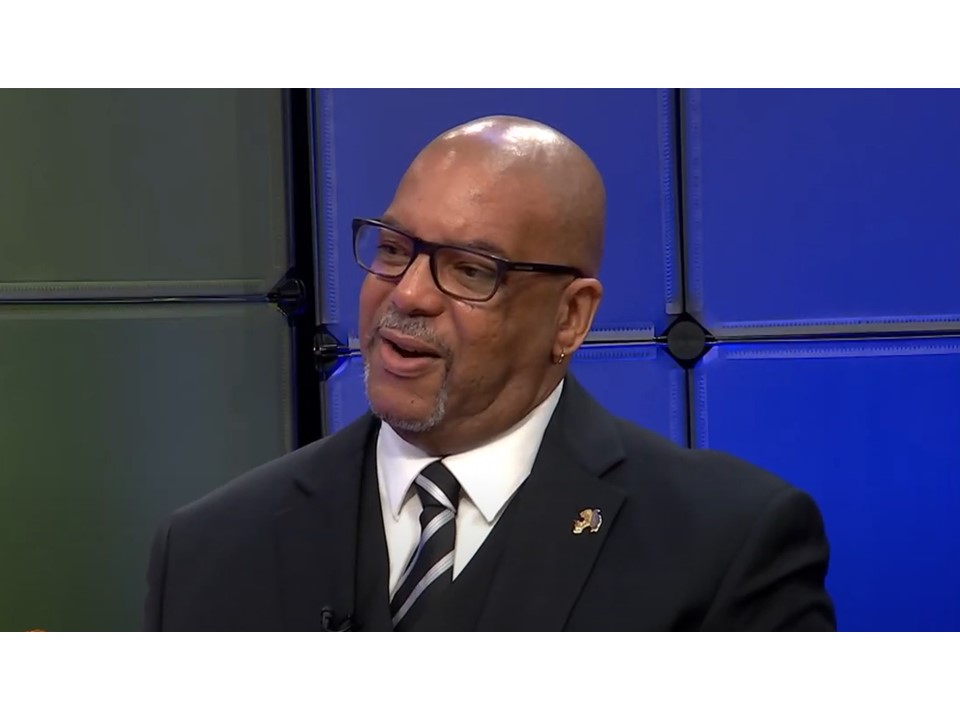
Stanley Richards, Deputy CEO of Fortune Society, was interviewed along with FJC CEO Sam Marks on the Open program (BronxNet).

Fortune Society and FJC Leadership on Philanthropy, Partnership, Impact

For its Fourth of July broadcast, BronxNet’s OPEN program featured Fortune Society Deputy CEO Stanley Richards in dialogue with FJC CEO Sam Marks on our recently-announced revolving loan fund.

“I would encourage donors who are thinking about impacting nonprofit organizations to look at this model,” Mr. Richards said.  “It’s an innovative model that allows the recycling of an investment to bring about transformative opportunities for people.”

See the interview here.

The Fortune Society is a leading provider of services and housing for people coming out of incarceration.  FJC recently worked with Fortune to arrange a revolving fund, which will help Fortune scale its work developing supportive housing, providing a dedicated source of capital that can be used to initiate these time-intensive, critical projects.  The revolving fund was capitalized with funds from a handful of Donor Advised Fund (DAF) accounts, matched by Fortune’s own resources.

“I would encourage donors who are thinking about impacting nonprofit organizations to look at this model. It’s an innovative model that allows the recycling of an investment to bring about transformative opportunities for people.”

Stanley Richards, Deputy CEO, Fortune Society

“Where FJC comes in is helping Fortune Society with a particular bottleneck they face in the housing development process,” explains Marks. “Fortune staff are experts in assembling all the complex financing to build supportive housing.  It’s in those early stages – predevelopment – where they might need a few hundred thousand dollars” to access the tens of millions of public and private financing needed to build these projects.

In the interview, Richards notes that Fortune is attempting to have a lasting, generational change.  He cited his own experience as a formerly incarcerated individual, who received the resources and support to turn his life around, start a family, and break the cycle of incarceration.  “That’s what Fortune does every single day when we serve the men and women who walk through our doors. We provide supportive housing, education, and employment.  It’s about generational change.”

Richards also noted the importance of partnership in accomplishing Fortune’s mission, and that by working together, Fortune, FJC and its donors can be more impactful than by working alone. 

“This is a model that nonprofits in the housing sector should take a look at,” Mr. Richards said.  “And it’s also a model for someone who has resources asking, How do I leverage my resources to make a difference?  This is an opportunity for people to lean in, in a way that is aligned with your values and the impact you want to have.”

Photo by Buck Ennis, courtesy of Crain's New York Business

Crain’s Op-Ed By Sam Marks and JoAnne Page on Creative Philanthropy and Fighting Homelessness

Crain’s New York Business has published an op-ed by FJC CEO Sam Marks and JoAnne Page, the president and CEO of The Fortune Society.  The piece, titled “How Creative Funding Can Help Kickstart Complex Capital Projects,” describes a unique partnership between a leading nonprofit serving people coming out of incarceration and a foundation sponsor of donor advised funds (DAFs).

Through the initiative, FJC has arranged a fund that will empower The Fortune Society to scale its housing development work.  See our FAQ document for more information.

From the op-ed:

The Fortune Society, a leading supportive housing provider, and FJC – A Foundation of Philanthropic Funds, recently launched a revolving loan fund that will provide desperately needed working capital to kickstart supportive housing projects.

The fund’s low-interest loans are capitalized by contributions from FJC’s donor-advised fund holders and matched by additional resources from the Fortune Society. The loans will allow the nonprofit Fortune to significantly expand its supportive housing portfolio over the next five years.

Most donors are not thinking about using their philanthropic dollars this way. But imagine the possibilities if philanthropic leaders who think and act in business terms were to partner closely with nonprofits. They could help identify and fill common gaps that nonprofits face. Donors would see a bigger impact from their giving, and entrepreneurial nonprofits could take on more ambitious projects to solve our most challenging problems.

Read the full article here.

‘Foundation Review’ Journal Publishes Reflection by FJC CEO Sam Marks on DAFs and Impact Investing

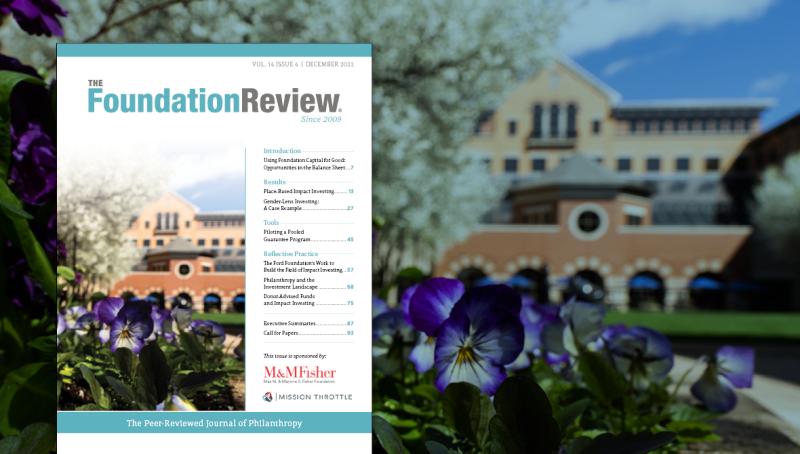
Reflecting on best practices by FJC and its imaginative donors, FJC Chief Executive Officer Sam Marks wrote “Donor Advised Funds and Impact Investing: A Practitioner’s View”, which was accepted for publication by The Foundation Review in their December, 2022 issue focusing on impact investing.  The journal is the first peer-reviewed journal of philanthropy, written by and for foundation staff and boards. 

The article provides a brief overview of FJC’s origin story and the establishment of its Agency Loan Fund as a bespoke impact investing vehicle, which allows participating donors to invest in a pool of loans to nonprofit borrowers that help them bridge cash flow and achieve their missions.

Marks also highlights some of the innovative transactions FJC has executed with its donors, including a 0% interest revolving line of credit for Brighter Tomorrows, the refinancing of the Tenement Museum’s mortgage, accounts that allow foundations to participate in crowd-sourced small business loans, and the recently closed revolving fund for the Fortune Society.    

“In the end,” Marks writes, “the potential for DAF sponsors to accelerate impact investments may also come from their ability to aggregate not just dollars but inspiration.”

Read the full article here.

Photo courtesy iStock.com/Michael Burrell

2022 Year-End Giving – A Conversation with FJC Board Member Neal Myerberg

As the end of the year approaches, FJC CEO Sam Marks interviewed FJC Board Member, Neal Myerberg, Principal at Myerberg Philanthropic Advisors, who consults with charitable organizations, foundations and philanthropists.  A transcript of the conversation, edited for length and clarity, is below.

Please note that FJC does not offer tax advice; any prospective donor should seek the advice of a qualified estate and/or tax professional to determine the consequence of his/her gift.

It’s a time of real uncertainty in the markets, with equity markets down for the year, plus rising inflation putting downward pressure on bond prices.  At a time when many donors are seeing their portfolios decline, how should donors think about year-end giving?

There’s no question that investors may not be feeling as flush as they did in prior years.  That said, long-term investors may still have capital gains from securities they bought many years ago.  It’s worth asking the question to their tax attorneys or planning professionals.

“Regardless of what the market is doing, it’s always a good time to plan.”

Neal Myerberg, Principal, Myerberg Philanthropic Advisors

It’s also good to remember that cash and appreciated stock aren’t the only assets that can be donated.  FJC has accepted real estate, cryptocurrency, illiquid or lightly traded stock in advance of an IPO.  These items can take a bit more lead time for be approved by FJC’s board committees, so I’d definitely encourage reaching out to Sam or Regina soon if people are looking to make these donations before the end of the year.

Are there any tried-and-true rules of thumb that philanthropically minded families should keep in mind, even in a down market?

Regardless of what the market is doing, it’s always a good time to plan.  You might review your account documents and make sure that you have Successor Recommenders identified. And maybe it’s a good time to involve those successors—family members, the next generation—in your giving.  Some donors engage in a family-wide “strategic plan” for their philanthropy. FJC encourages this and can even allow some or all of the costs of strategic consultants to be paid with funds in a donor’s DAF account.

For so many donors we work with, philanthropy is part of their legacy.  Whether they are identifying beloved organizations for final distributions, or setting up a Board-designated fund to live on in perpetuity, FJC is really committed to meeting its donors where they are and creating a customized solution for them. 

Could you offer one or two planning techniques that could be highly impactful for increasing our donors’ philanthropic capacity? Any little-known tactics that you wish more DAF account holders would consider?

FJC’s donors probably know that the Treasury Department has reinstated annual required minimum distributions for people who have inherited Individual Retirement Accounts. This is basically a reinterpretation of 2019’s Secure Act, which eliminated the “ten-year stretch”.  In plain language, this means that under this change someone inheriting an IRA who does not fall into the category of exceptions has to take all Required Minimum Distributions (RMDs)–and pay taxes on them—within 10 years, instead of over their whole lifetime. 

IRA owners that want their beneficiaries to receive benefits for life are interested in considering other alternatives.  One solution may be to direct distribution of all or a portion of the IRA to a charitable remainder trust (CRT) after the lifetime of the IRA owner.  The trust would be constructed to make fixed rate payments to one or more beneficiaries for life. Thus, the beneficiaries of the IRA owner would not be limited, as direct heirs of the IRA, to a ten-year payout. At the end of the term of the CRT when all beneficiaries have passed away, the remaining assets may be distributed to a family DAF for recommendations by the next family generation; e.g. the children or heirs of the lifetime beneficiaries of the CRT.

Anything you’d like to highlight about our ever-changing tax code?

While the estate and gift tax unified credit continues to increase year-by-year, the provisions governing annual increases will sunset at the end of 2025.  Beginning in 2026, the unified credit will drop to approximately $6.2-6.5 million ($5 million base in 2010 indexed for inflation through 2025) or such amount as shall be enacted before then to govern estate and gift taxes from and after January 1, 2026.  In addition, the maximum federal gift and/or estate tax rate may increase from 40% to 45%., Taking advantage of the current unified credit amounts ought to be considered in estate planning by the end of 2022 and over the following three years. 

Philanthropy and the Life Cycles of Individuals…and Families

Philanthropy and the Life Cycles of Individuals…and Families 

By Sam Marks

For some of our donors, charitable giving is motivated by more than tax benefits. For these donors, the philanthropic impulse is a calling, as critical to their sense of self and legacy as their professional lives. While donors may open a donor-advised fund (DAF) account with us as an individual, we often engage with a whole family system, or work with them to consider longer time horizons than just their own lives. 

When It’s a Family Affair

“My daughter’s sense of responsibility started with coat drives and food drives at her school,” one donor told me. “But encouraging her to support the causes she cared about with donations really focused our conversations about her values.” This donor set up a Young Philanthropist account, a specialized DAF account intended for individuals of college age or younger. These accounts lower the barriers to entry by decreasing their minimum start-up contributions (only $1,600, compared with the standard $5,000). 

Another donor told me that life events inspired their family’s philanthropic activities. “For both of my kids, we set up Collective Giving accounts when they got married,” she said, referring to a variation of a DAF account that allows multiple donors to pool their grant dollars. “We let their wedding guests build up this charitable resource as an alternative to just ordering something off the registry.” For both couples, the CGAs have evolved over time into their own family DAF accounts that have continued to be a mechanism for supporting their favorite nonprofits.

As with any DAF account, contributions to Young Philanthropist accounts and Collective Giving accounts are tax-deductible at the time of donation.

DAF accounts can be a philanthropic resource for families too. We have countless donors that engage family members as additional recommenders on their accounts, allowing, for example, their adult children access to all or a portion of their account to experiment with grantmaking. One family has set up a “master account” for the matriarch, with sub-accounts for each adult child that she funds at least once a year. For this family, dinner-table conversations veer into impromptu “foundation retreats” where topics of conversation include theories of change and grantmaking strategy. “It can get quite lively,” the donor told me. 

For some families, a professional philanthropic consultant may be called for. Families are complex systems and have dynamics that require some conversation, and at times moderation, on the road to determining a philanthropic strategy. As consultant Lauren Katzowitz Shenfield told FJC during a recent webinar, “The conversation always starts with values,” she explains, “because that underlies the entire practice of philanthropy.”

Fun fact: In many cases, FJC will allow donors to pay some or all of their philanthropic consultant fees from their DAF accounts!

Planning a Legacy 

Conversations about DAF accounts often start with questions of estate planning and tax efficiency, and evolve into questions of legacy: what our donors want to leave behind when they pass on. Our standard account-opening documents invite new donors to consider successor recommenders who can inherit their recommendation privileges, and of course donors may also list charities that can receive final distributions upon their deaths. 

Take the case of Karen Heine, who was dedicated over her lifetime to demonstrating how humans might integrate more harmoniously with nature and wildlife, even in urban settings. During her life, Ms. Heine established a conservation easement on her property: a voluntary, permanent contract whereby the landowner gives up development rights of a property in perpetuity, in return for tax benefits. Ms. Heine enjoyed a decades-long relationship with Colorado Open Lands, the nonprofit that stewarded the preserve, and the organization was one of several that received a significant grant upon her death.

In certain circumstances, FJC has also taken on the responsibility of carrying on the legacy of our donors. The Helen Rehr Fund was established as a board-advised fund in 2013, to honor the legacy of Ms. Rehr, who revolutionized and standardized the field of social work in her role as Chair of the Division of Social Work at Mt. Sinai. The organizing documents of the fund account requires the Board of FJC to “identify worthwhile projects determined by FJC to be used for social services, research, or training projects all to enhance health and mental health care for vulnerable populations within the State of Israel and the City of New York.” The most recent grant provided $100,000 to New York Lawyers for the Public Interest (NYLPI), working in coordination with program partner Community Access to advocate for New York City to establish a non-police response to mental health crises.

What are the special circumstances around your family and legacy? Contact CEO Sam Marks to start a conversation by reaching out at (212) 714-0001 or Marks@fjc.org

About Sam

Sam Marks is the Chief Executive Officer of FJC – A Foundation of Philanthropic Funds, a boutique foundation of donor-advised funds dedicated to helping you make your philanthropy work harder through flexible, creative, and customizable strategies. Sam works with imaginative donors and nonprofits to amplify their work and passion, providing unparalleled personal service and the expertise to execute complex transactions, all so that their clients can make the world a better place. His desire is to align his clients’ goals and needs with support for important nonprofits that are making a difference in the world so their wealth can be deployed for positive change. 

Sam has a bachelor’s degree from Brown University and a Master in Public Policy from the Harvard Kennedy School. Sam’s deep experience includes his role as executive director of the New York City office of Local Initiatives Support Corporation (LISC NYC), a community development financial institution that supports local champions to advance equitable development of historically underinvested neighborhoods. He has also acted as Vice President at the Deutsche Bank’s Community Development Finance Group, and director of housing development at WHEDCo in the South Bronx. Earlier in his career he founded Breakthrough New York, a youth development program. Sam is a third-generation New Yorker, married to a third-generation Brooklynite, with two sons. He has great affection for the culture and art forms New York is known for, from film to comic books to many genres of music. To learn more about Sam, connect with him on LinkedIn.
Customizing Your Giving: How You Invest

Customizing Your Giving: How You Invest

It’s well known that donor-advised fund (DAF) accounts allow donors to recommend grants to nonprofits of their choice. But donors can also recommend how funds are invested. FJC’s Chief Financial & Investment Officer Regina Rodriguez discusses the unparalleled customization available at FJC, and how our imaginative donors are taking advantage of it, in the following informative Q&A session. (This interview has been edited for clarity.)

Q&A With Regina Rodriguez, FJC’s Chief Financial & Investment Officer

Q: Like the assets of other nonprofit institutions like university endowments, the assets held in DAF accounts grow tax-free. What investment options are available to your account holders?

A: For most of our donors, the core menu of investments we offer provides a good range of choices. We offer a variety of low-cost mutual funds that are offered by traditional financial institutions like Vanguard, Bernstein, Janus, and others. These options include stocks (both U.S. and international), bonds, money market mutual funds. Donors have different levels of risk, different time horizons for their giving, and many of our donors can identify an investment allocation from our menu that suits their needs. We can provide donors with historic performance metrics of these core products against industry benchmarks, and the Investment Committee of our Board of Directors is constantly reviewing the menu to see if we need to make adjustments to the menu.

Q: But I gather some donors prefer to order “off the menu”? 

A: Yes, we’re able to respond to all kinds of requests. In fact, we were founded back in 1995 by donors that wanted to create a flexible, nimble sponsor of DAFs, and a big part of that meant the ability to be maximally responsive to donors that wanted to take a more customized approach to their investments.

Q: What are some of the ways donors customize their investment approaches?

A: We have donors that want to align their accounts with a particular investment approach that mirrors their or their family’s assets. In some cases, donors’ accounts are invested in alternative investments, such as hedge funds or private equity, or even illiquid assets, like shares or interests in privately held companies. For other donors, it’s less about esoteric investment products, and more that they want to maintain a relationship with a trusted advisor. They want to see their assets in their account invested in a similar way to their personal assets, and they want their advisor to have full visibility of their DAF accounts alongside their other personal brokerage accounts. 

Q: What about impact investing?

A: A lot of donors find their way to FJC because of our longstanding commitment to impact investing, in particular our Agency Loan Fund investing option. We’ve been doing that even before impact investing was “a thing”! 

The Agency Loan Fund is one of the options on our core menu, and donors can choose to invest some or all of their account holdings in it. We pool these funds together and use them to make bridge loans to nonprofits. Loans from the Fund help nonprofits of all kinds manage their cash flow, bridge public sector commitments, acquire property for affordable housing or community facilities. The donors earn a competitive risk-adjusted return, while their funds are being invested in the service of nonprofit missions. Plus, the pooled nature (and our other funding sources) means that donors invested in the Loan Fund don’t have to sacrifice liquidity, and funds are always available if they want to make a grant.

We can also respond to donors who want to customize their account investments with an eye toward impact investments. For example, we worked with a donor that wanted to invest in a career impact bond, supporting a number of training programs that are upskilling workers. We also helped a donor refinance the mortgage of the nonprofit Tenement Museum, which involved purchasing a bond issued by the City of New York and changing the terms so that the museum was obligated to pay interest-only for five years. That one was complicated to get done, but it had a great impact on the organization, which was stabilizing itself coming out of the pandemic.

The donors that work with us typically want to go beyond ESG investing (although we offer products that can do that too); they want to actually invest in nonprofits and help them achieve their missions.

Q: If a donor wants to customize their investment approach, how do they get started?

A: Reach out to speak to us about it. We love getting these calls!

Typically, it’s donors with larger accounts (usually above $1 million) that will be allowed this level of customization. Also, anytime a donor wants to do something that’s not within our standard investment menu, we have to seek approval from the Investment Committee of our Board of Directors to ensure that the investment approach is consistent with our fiduciary role. The Investment Committee is a sophisticated (and committed) group of professionals, so we can usually arrive at an answer relatively quickly.

Also, when there’s an investment advisor or manager that works with multiple donors, we can consider that $1 million threshold in the aggregate. We’ve established a number of these formal, institutional Alliance Relationships, where the firms see FJC’s boutique approach as adding value to their client relationships.

Q: What else should people know about what’s possible with DAFs?

A: DAFs have a reputation for being somewhat standard-issue mechanisms for achieving modest philanthropic goals (like annual giving or memberships at religious institutions). They don’t have to be this way! We’re amazed by the creative ideas some of our donors come up with, and we welcome these opportunities to do something for impact that’s new and different. 

We’re Here to Help

Are you ready to customize your investment approach? Or do you still have questions about how to take advantage of donor-advised funds? Our FJC team is here to help. Reach out to us today at (212) 714-0001 or Marks@fjc.org

About Regina 

Regina Rodriguez joined FJC in December 2019 as the Chief Financial and Investment Officer. Regina’s journey began in public accounting, performing audits for clients in an array of industries, which include financial services, manufacturing, and real estate. After joining EisnerAmper, Regina discovered her true passion for the non-profit industry by auditing many of New York’s top cultural, educational, and religious organizations. During a period of changing reporting requirements and regulations, Regina collaborated with the New York State Society of CPAs Foundation for Accounting Education and Philanthropy New York to present seminars and tailored trainings to both financial and non-financial professionals with the goal of making the technical content understandable. Since leaving public accounting, Regina has served as Controller for the Solomon R. Guggenheim Foundation and Director of Finance for the Long Island Children’s Museum. Regina graduated Magna Cum Laude with a Bachelor’s degree in Accounting from Adelphi University. She holds a CPA license in the state of New York and serves on her local school district’s Audit and Budget Committees.