From Ghana to MoMA: The Archive Behind A Photograph
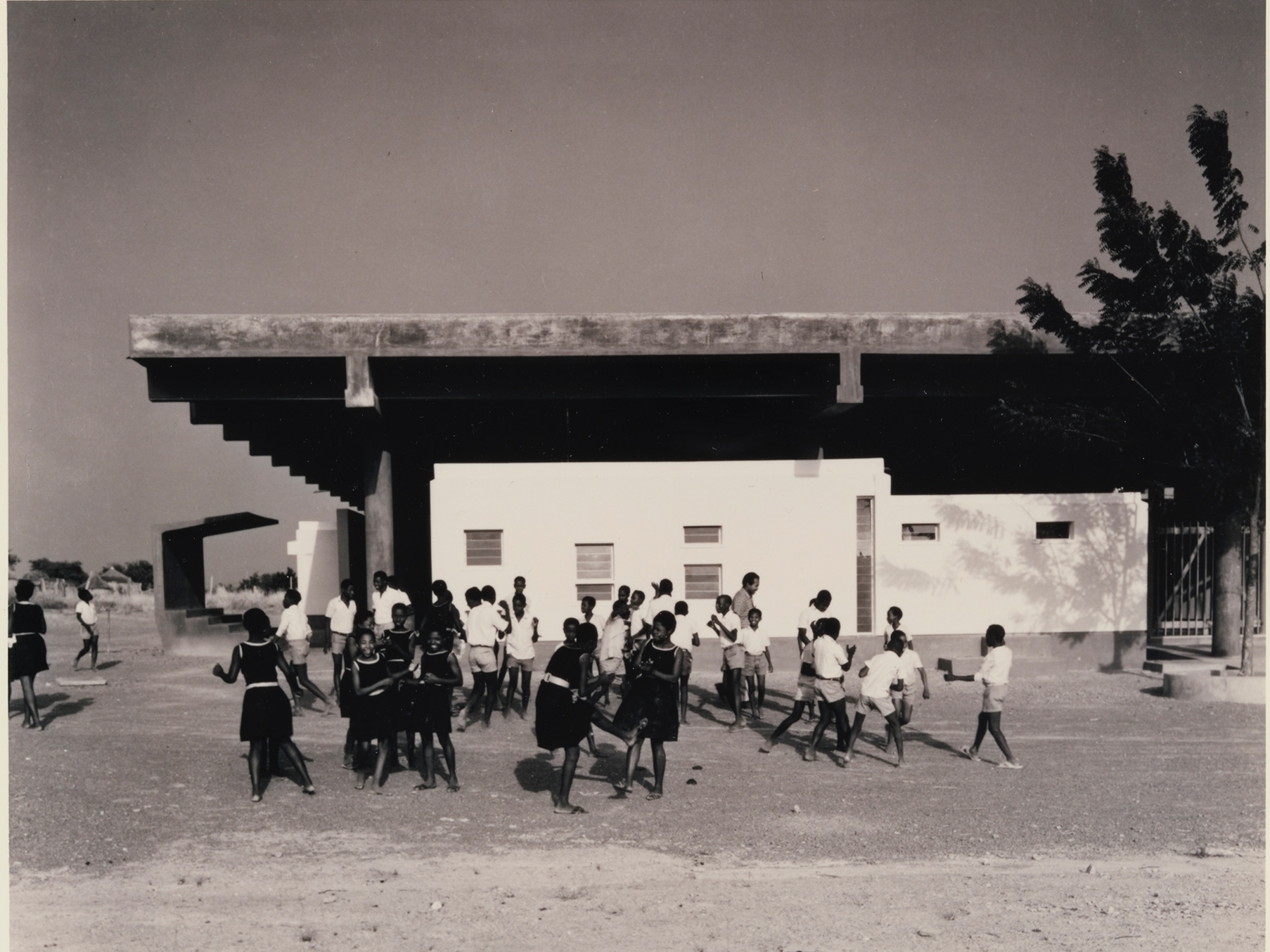
This fall on the third floor gallery of the Museum of Modern Art hangs a photograph of the Bolgatanga Regional Library in Ghana, a modernist structure designed in the 1960s by American architect J Max Bond. The photograph, by Willis E. Bell, is part of MoMA’s “Architects of Liberation: Modernism in Western Africa” exhibition, which examines modern architecture of the 1950s through 1980s in newly founded West African countries as a way for nations to redefine themselves in contrast to colonial rule.
The inclusion of Willis Bell’s photograph was made possible by Mmofra Foundation, a fiscally sponsored project of FJC. Among other projects that enrich the cultural and intellectual lives of children in Ghana, the Mmofra Foundation houses the Willis Bell Archive. The archive captures the work of renowned photographer Willis Bell, who spent two decades in Ghana following the country’s national independence in 1957, photographing political and cultural events, portraiture, landscapes, everyday life and architectural projects. He worked closely with Efua T. Sutherland, a pioneering cultural activist, head of Ghana’s National Commission on Children and founder of Mmofra Foundation.
“The dynamic and passionate young Willis Bell Archive conservation team is typical of Mmofra Foundation’s advocacy style across its projects in arts & culture, play, urban space for children and heritage stewardship.”
Amowi Sutherland-Phillips, International Representative of Mmofra Foundation
Shortly after Sutherland founded Mmofra Foundation, Bell gifted his life’s work of over 40,000 negatives and prints to the foundation. For the next twenty-five years, the Mmofra Foundation, now led by Sutherland’s daughters, Esi Sutherland-Addy and Amowi Sutherland-Phillips, led a major conservation and digitizing project of the collection. Through fiscal sponsorship at FJC, Mmofra Foundation has been able to work with US-based donors to fundraise for the initiative, and partner witha number of institutional collaborators worldwide. The Mmofra Foundation finally opened the Willis Bell Archive to the public in Accra in 2025.
“The dynamic and passionate young Willis Bell Archive conservation team is typical of Mmofra Foundation’s advocacy style across its projects in arts & culture, play, urban space for children and heritage stewardship,” says Amowi Sutherland-Phillips, International Representative of Mmofra Foundation
The MOMA isn’t the only museum to feature work from the archive this summer. At the Ghana! Dreaming Independence exhibition at the 2026 Rencontres d’Arles Photo Festival, in Arles, France, the focus is on the role of photography and publishing as Ghana sought to define its collective identity in the postcolonial era. Sutherland and Bell’s 1960 photo essay, Playtime in Africa, is included in the exhibit.
In both exhibitions, the work of Sutherland and Bell, and the archival accomplishments of the Mmofra Foundation highlight the dynamic cultural and intellectual identities that were being redefined in Ghana in the era.
The Willis Bell Archive can be publicly accessed online here, and information on the Arles exhibition can be found here. To donate to support the Mmofra Foundation through FJC, please find their donation page here, or reach out to program administrator Sophia Trombold, trombold@fjc.org to transfer funds directly from your FJC account to MMofra Foundation.
Special thanks to FJC Program Administrator Sophia Trombold for writing this story.
Thirty Years of Finding a Way
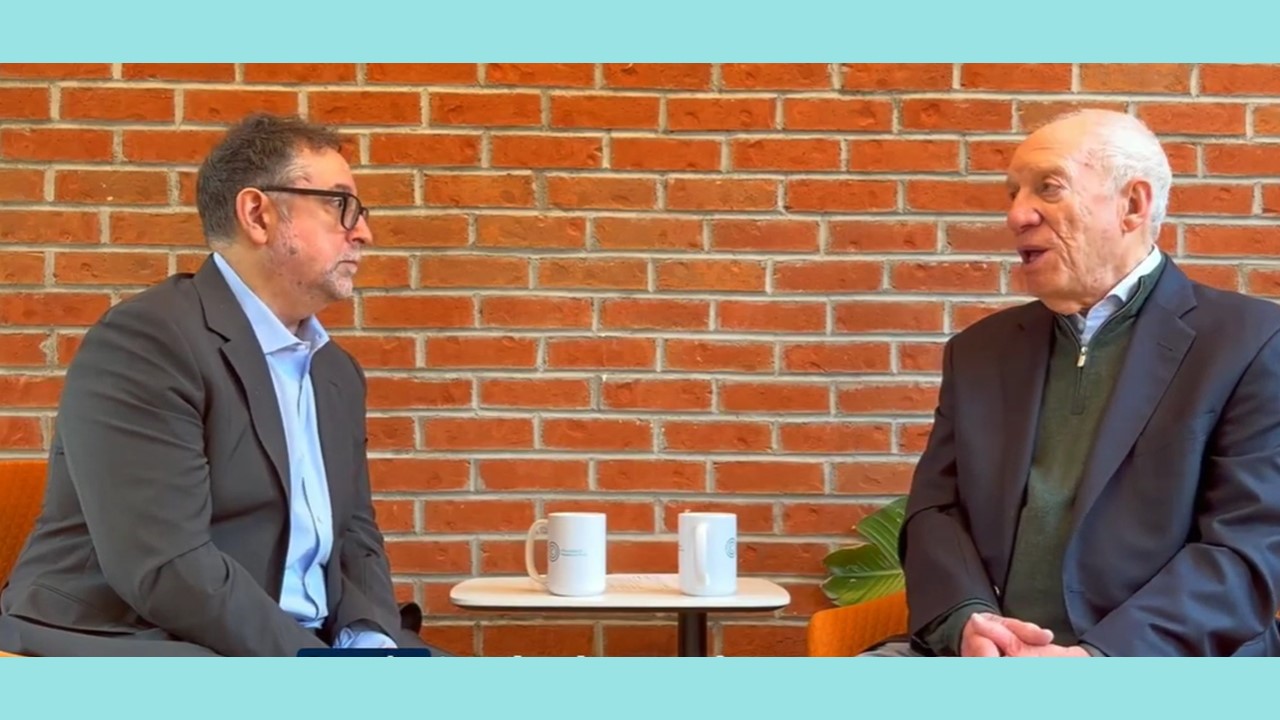
Thirty years ago, FJC started with donors who wanted more choice from their philanthropy. Founding Board Member Neal Myerberg reflected on the organization’s journey with current FJC CEO Sam Marks, and this conversation was captured in the linked video.
When FJC started, the donor-advised fund industry was limited by a lack of imagination. Few sponsors of DAFs accepted anything other than cash or appreciated stock. Donors were limited in how their accounts were invested for growth. Donors could only deploy their account funds as grants, not as loans or impact investments.
FJC’s founders saw room for something different. They believed that using the tools of finance could increase giving capacity and drive more impact.
Since its founding, FJC has deployed nearly $1 billion in grants through donor-advised funds. It has also helped move hundreds of millions more into the nonprofit sector through loans, revolving funds, enterprise capital, fiscal sponsorship, and other customized structures.
FJC remains a place for donors who want more from their philanthropy—and for nonprofits whose needs are not always solved by a grant. In celebration of thirty years of impact, we’re sharing stories and insights from the people and partners that have built FJC.
In a recent conversation with FJC CEO Sam Marks, founding board member Neal Myerberg described the early promise simply: donors could come to FJC with ideas, and FJC would find a way. Here are some of his key insights.
A Different Kind of DAFSponsor
FJC was built for donors who think carefully about capital. Many bring the same discipline to philanthropy that they bring to business, investing, and estate and legacy planning. Donors who think creatively about how to give can compound their impact.
FJC’s sophistication and responsiveness allows it to work with donors who have creative ideas about what they donate, and how those funds grow over time. FJC accepts appreciated stock, real estate, cryptocurrency, private company interests, and other complex assets. It works with donors that want to customize how those funds are invested. With our donor’s guidance, FJC uses those philanthropic assets to fund grants, but also nonprofit loans and investments that can be repaid and reused over time.
Grants (and Much More)
On the nonprofit side, the same principle applies.
For nonprofits to achieve their missions, they must also thrive as operating businesses. Like any enterprise, they manage payroll, real estate, debt, delayed contracts, seasonal revenue, expansion plans, and moments of real financial pressure.
Some challenges call for grants. Others call for bridge financing, working capital, concessionary debt, guarantees, or revolving funds.
FJC’s role is to help translate those needs into structures that donors can understand and support.
That has meant helping a nonprofit acquire property quickly committed public funding arrived. It has meant restructuring a cultural institution’s debt so a it could survive a severe revenue shock. It has meant creating revolving funds where the same philanthropic dollars can help one household, one project, or one organization, and then be used again.
Getting to Yes
FJC’s culture is often described as flexible or nimble. Those words are true, but they can make the work sound easier than it is. Getting to yes requires discipline and expertise.
It means evaluating complex assets. Reviewing proposed investments. Underwriting loans. Servicing payments. Reporting back to donors. Managing compliance. Asking hard questions before money moves.
Neal described FJC as operating in a “can-do mode.” That phrase captures something important. Donors do not come to FJC looking for a call-center experience. They come because they want people who will listen carefully, understand the goal, and figure out how to get it done.
A Launchpad For Impact
FJC’s fiscal sponsorship work comes from the same instinct.
For people with charitable ideas, fiscal sponsorship can provide the structure needed to begin: a 501(c)(3) home, tax-deductible receipting, grants administration, vendor payments, and the operational backbone required to move from vision to action.
Neal called fiscal sponsorship one of the most exciting things FJC does, because it helps people pursue charitable missions they might not otherwise be able to.
That work also keeps FJC close to the realities of the nonprofit sector. We see what emerging initiatives need. We understand the operational burden behind good ideas. And we know that sometimes the most useful thing philanthropy can provide is not only money, but structure.
Constantly Innovating
The next generation of donors is asking more complex questions.
More wealth is held in private companies, real estate, and other less liquid assets. More donors are thinking about grants, loans, investments, and social enterprise as part of one broader effort to make change. More nonprofits need capital that is flexible enough to match the way their work actually happens.
Thirty years in, our job is still to help donors use philanthropy creatively, responsibly, and with serious intent. We still understand what nonprofits need and build structures that can help. And we still find a way when a good idea requires some creativity and the flexibility to build something new.
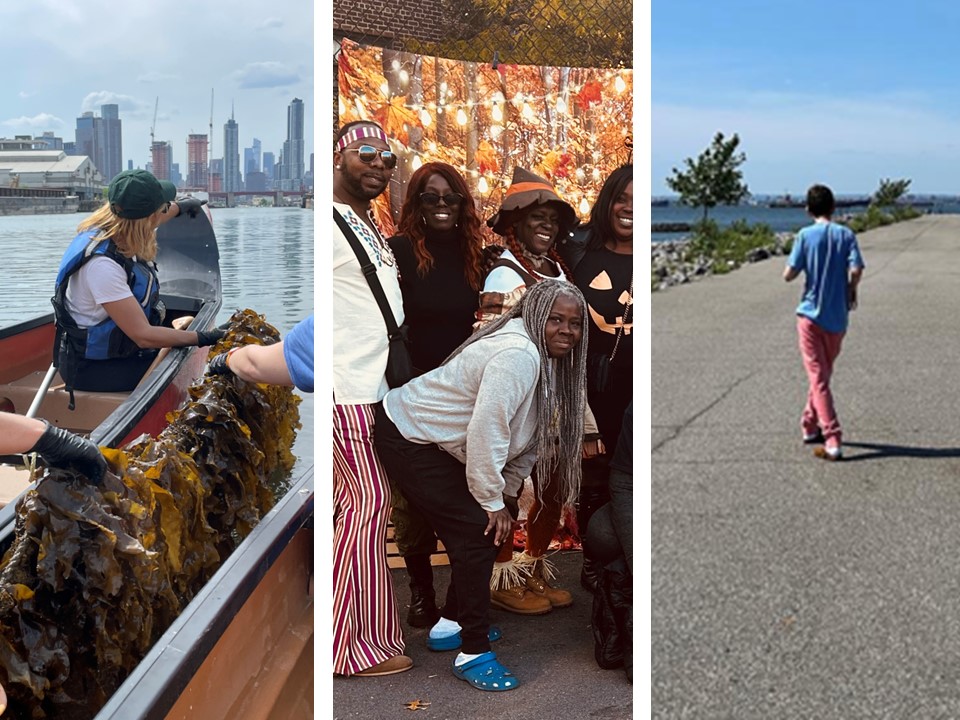
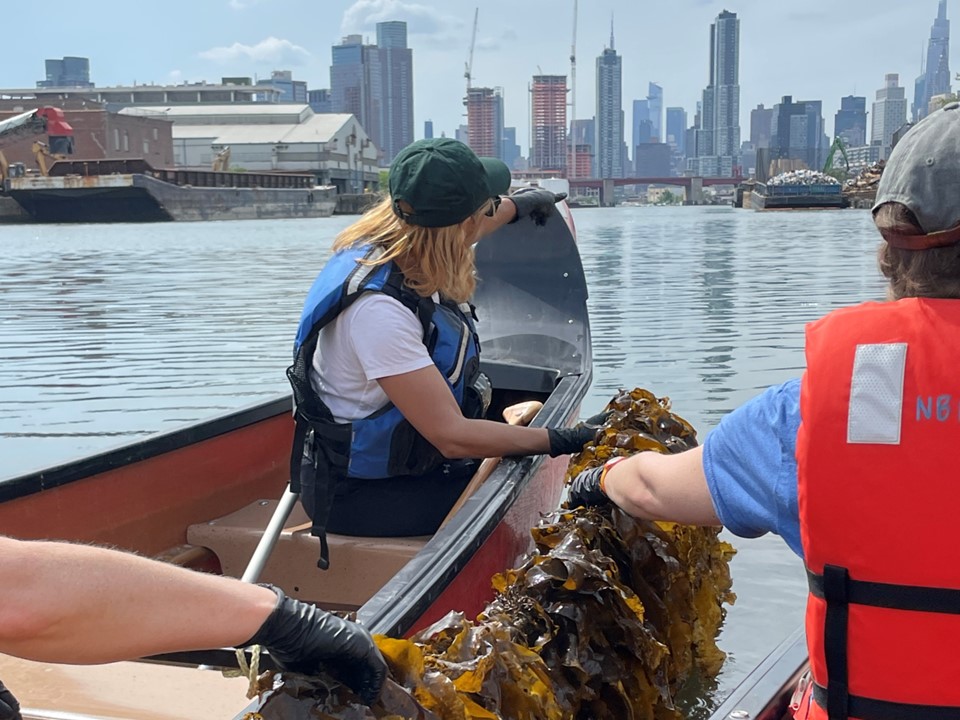
Images from some of the organizations that graduated from our Fiscal Sponsorship Program in 2025: Wheel It Forward, Changing Ground Project, and The Bell
FJC’s Fiscal Sponsorship Program 2025 Year in Review
In 2025 FJC celebrated three projects that “graduated” from our Fiscal Sponsorship Program achieving operational independence with their own 501(c)(3) tax-exempt status. The Bell provides journalism training and mentorship to New York City students, with a goal of helping them succeed in media careers and amplifying underrepresented voices in the field. Wheel It Forward operates a free, community-based lending library for durable medical equipment (DME) and assistive devices, making it easy for people to borrow needed items and for others to donate used equipment, improving quality of life, saving money, and reducing landfill waste by keeping essential mobility aids circulating within the community. The Changing Ground Project aims to transform low-density areas into prosperous, mixed-use neighborhoods using land readjustment, benefiting both owners and investors through sustainable development.
This year FJC also welcomed several new emerging projects into the Program, including: The Debt Gala, a red carpet fashion event and variety show inspired by the Met Gala, dedicated to raising funds for organizations advancing economic justice: Depth of Field, a program empowering underrepresented voices in documentary filmmaking by training young and aspiring filmmakers from marginalized communities; Visual Storytellers Fund, which empowers photographers who are creating compelling documentary photo essays that address critical social, environmental, economic, and cultural issues, and to provide grants and resources to photographers around the globe. Commons Library Limited, which provides an online library for the change makers of the world and for those interested in positive social change and community organizing; the Central Brooklyn Food Cooperative, a cooperatively owned grocery store in support of a more just and sustainable food system in Central Brooklyn; the Eli Sunshine Foundation, which raises awareness and to fund research and trials to find a cure for Ewing Sarcoma, and to bring sunshine to children and families living with childhood cancer; and the Mental Health Workforce Fund, a collaborative, philanthropic fund to address mental health workforce shortages in NYC by providing grants to organizations advancing culturally competent workforce development and pipeline programs.
For more information about our Fiscal Sponsorship Program, review our FSP Brochure.
Podcast Reveals The History of a Congregation During the AIDS Epidemic
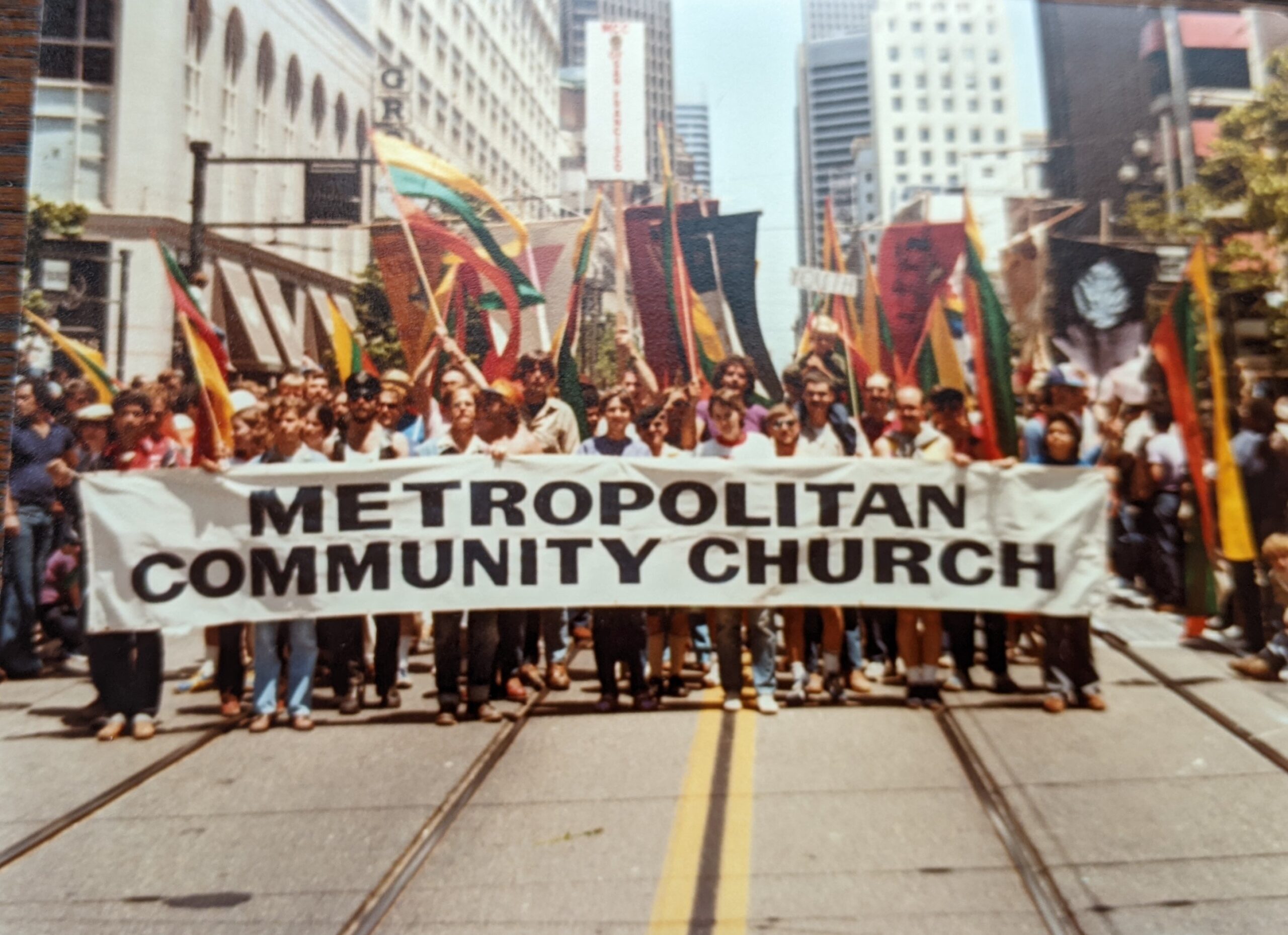
This October marked the launch of Eureka Street Production’s documentary podcast, When We All Get to Heaven. The ten-episode series is the culmination of a fourteen-year archival and oral history project focusing on the Metropolitan Community Church of San Francisco (MCCSF) during the height of the AIDS epidemic. The project is fiscally sponsored by FJC.
In 2011, historian and co-founder Lynne Gerber was informed by a long-time member of MCCSF that he had been safekeeping over 1,200 cassette tapes containing audio recordings of the Church’s services under a floorboard in their sound room. MCCSF was one of the first gay-positive churches in the US, known for both its location in the Castro and its acceptance of members across the theological spectrum. Lynne began listening to the tapes and uncovered the story of a community that came together to face personal, social and political trials throughout the AIDS epidemic, including the deaths of hundreds of the church’s members.
“We’re so grateful to FJC for making the business end so simple. Because the rest of it was more complex than any of us imagined!”
Lynne Gerber, co-founder of Eureka Street Productions
The tapes were recorded by members of the MCCSF from 1987-2003 to create a way for members of the church to listen and sing along to the services once they became too affected by HIV-related illness to attend. Recognizing their historical value, Lynne brought in other researchers, like co-founders Siri Colom and Arianna Nedelman to digitize 325 of the cassettes, and Eureka Street Productions was born.
Eureka Street Productions joined FJC’s Fiscal Sponsorship Program in 2018 to formalize their research and begin fundraising for the production of a documentary podcast. Following several years and iterations of the oral history project, Eureka Street was awarded multiple grants to produce When We All Get to Heaven.
Under FJC’s 501(c)(3) umbrella, Eureka Street was able to be funded by charitable dollars and allowed them to hire a skilled production team. Their ability to raise tax-deductible contributions proved especially beneficial after a series of public funding cuts last spring, and the team was able to move quickly to secure support from a private foundation to supplement the hole in their production budget.
The tapes “…uncovered the story of a community that came together to face personal, social and political trials throughout the AIDS epidemic, including the deaths of hundreds of the church’s members.”
“We still can’t believe When We All Get to Heaven is being released into the world!” said Lynne Gerber, co-founder of Eureka Street Productions. “FJC has been with us every step as we’ve gone from three partners with a weird obsession with an archive to a 10-person production team and a national distribution partner in Slate. We’re so grateful to FJC for making the business end so simple. Because the rest of it was more complex than any of us imagined!”
The podcast partnered with Slate’s Outward podcast to air the weekly episodes. The episodes feature sounds of the sermons, singing from the choir, and the voices of MCCSF congregants reflecting on that period at the church. Episodes can be found on their website, here.
Special thanks to Sophia Trombold, Program Administrator for FJC’s Fiscal Sponsorship Program, for writing this story.
A Scrappy Gala That Combats Medical Debt
The night before celebrities flooded the steps of the 2025 Met Gala, a crowd gathered on a red carpet across town in Gowanus. That carpet, made of sustainable fabrics, was filled with individuals dressed in theme for the Debt Gala. This “red carpet for the people” was imagined as counterprogramming to the Met Gala with an alternative objective: to combat medical debt in the United States.
The 2025 Debt Gala was the third iteration of the event run by co-founders Tom Costello and Molly Gaebe. After running the program independently for two years, The Debt Gala joined FJC’s Fiscal Sponsorship Program to provide some administrative support for the fundraiser’s third iteration.
Partnering with FJC as our fiscal sponsor was a HUGE step forward—helping us channel all this creative energy into a sustainable, strategic force for good.
Tom Costello, co-founder, The Debt Gala
In its first two years, the Debt Gala successfully helped erase more than $2.5 million dollars of medical debt by providing grants to Undue Medical Debt, whose mission is to erase medical debt for vulnerable families and work toward a healthcare system where everyone can access care without financial ruin. To do this, they purchase and forgive large portfolios of medical debt through donor fundraising.
This year, they hope to support the debt-purchasing structure of Undue Medical Debt to top those numbers, and they will also expand their financial support to nonprofits like For the Gworls.
The event began with a red carpet before a night of comedy, drag, dance and musical performances. Spirits were high, and outfits crafted from reusable materials stayed pinned together throughout the night.
“This year’s Debt Gala was our biggest and boldest year yet,” says Molly Gaebe, co-founder of the Gala. “We proved once again that mutual aid doesn’t have to be quiet or polite—it can be loud, glamorous, and hilarious. The Gala may be absurd in all the best ways, but its mission is dead serious: to celebrate the power of collective care, and to lift up those most impacted by economic injustice and medical debt.”
Adds co-founder Costello, “Partnering with FJC as our fiscal sponsor was a HUGE step forward—helping us channel all this creative energy into a sustainable, strategic force for good.”
To make a donation in support of the Debt Gala, please follow this link.
Interested in supporting this organization with your FJC DAF account ? It’s easy for us to make an account-to-account transfer from your FJC DAF account. Simply reach out to FSP Program Administrator Sophia Trombold (Trombold@fjc.org) to authorize the transfer.
Special thanks to Fiscal Sponsorship Program Administrator Sophia Trombold for writing this story.
Three new fiscally sponsored projects at FJC: Seaweed City, Hallets Playground Alliance, and CHInyc.
From Vision to Action: How FJC’s Fiscal Sponsorship Program Empowers Changemakers
At FJC, our mission is to amplify the power of philanthropy by supporting initiatives that spark innovation, foster resilience, and create lasting change in our communities. One of the ways we achieve this is through our Fiscal Sponsorship Program, which empowers emerging organizations to focus on their transformative missions while we handle the administrative and fiscal responsibilities of nonprofit management.
The Fiscal Sponsorship Program reflects our commitment to identifying and nurturing bold ideas that address pressing social and environmental challenges. By providing access to nonprofit status, funding pathways, and operational support, we help grassroots leaders accelerate their impact and connect with donors and supporters who share their vision.
Attention, FJC Donors: interested in supporting these organizations with your DAF account for Giving Tuesday or your year-end giving? It’s easy for us to make an account-to-account transfer from your FJC DAF account. Simply reach out to FSP Program Administrator Sophia Trombold (Trombold@fjc.org) to authorize the transfer. And keep in mind our year-end deadlines!
Of the several new programs that joined our Fiscal Sponsorship Program in 2024, we are proud to spotlight three inspiring organizations. These organizations were chosen for their innovative approaches, community-driven missions, and their readiness to create real change. Each organization is managing active fundraising campaigns to support their work.
Seaweed City is transforming New York Harbor with regenerative seaweed aquaculture, improving water quality, restoring marine habitats, and strengthening coastal resilience.
Hallets Playground Alliance fosters wellness, connection, and inclusion by turning local parks in Queens into vibrant community spaces through free, family-friendly programming.
CHInyc is pioneering a housing model that creates inclusive communities for neurodiverse adults, promoting independence, dignity, and meaningful social connections.
These initiatives represent the heart of what FJC’s Fiscal Sponsorship Program stands for: providing the tools and resources for innovative leaders to build solutions to the challenges they see in the world. Whether they are restoring the environment, revitalizing community spaces, or reimagining housing, these projects exemplify the power of grassroots innovation to create lasting impact.
We are thrilled to support these organizations as they fundraise and expand their programming, and we invite you to learn more about their work.
Seaweed City: Harnessing the Power of Kelp for a Healthier New York Harbor
As climate challenges continue to rise, Seaweed City is leading the way in innovative, nature-based solutions with its regenerative seaweed farms. Focused on revitalizing New York’s estuarial waters, Seaweed City uses kelp to clean water, create essential marine habitats, and buffer against coastal erosion. Kelp, often called “nature’s filter,” absorbs excess nutrients from the water and contributes to a healthier marine ecosystem.
The recent installation of Seaweed City’s kelp garden on Governors Island marks an exciting expansion. Open to the public, this living laboratory is a place for residents, students, scientists, and environmental advocates to connect with the marine environment and explore the many ecological benefits of seaweed. Seaweed City’s programs also create hands-on opportunities for community members, encouraging participation in environmental stewardship and raising awareness about the power of urban aquaculture. Through partnerships with community-based organizations, schools, and environmental groups, Seaweed City is building a movement that champions resilience and sustainability along New York’s waterfront.
“Thanks to FJC’s Fiscal Sponsorship Program, we are able to focus on expanding our kelp gardens and engaging communities in this vital work. Together, we’re building a healthier, more resilient waterfront for New York City.” – Shanjana Mahmud, Executive Director
Hallets Playground Alliance: Strengthening Community Through Wellness and Connection
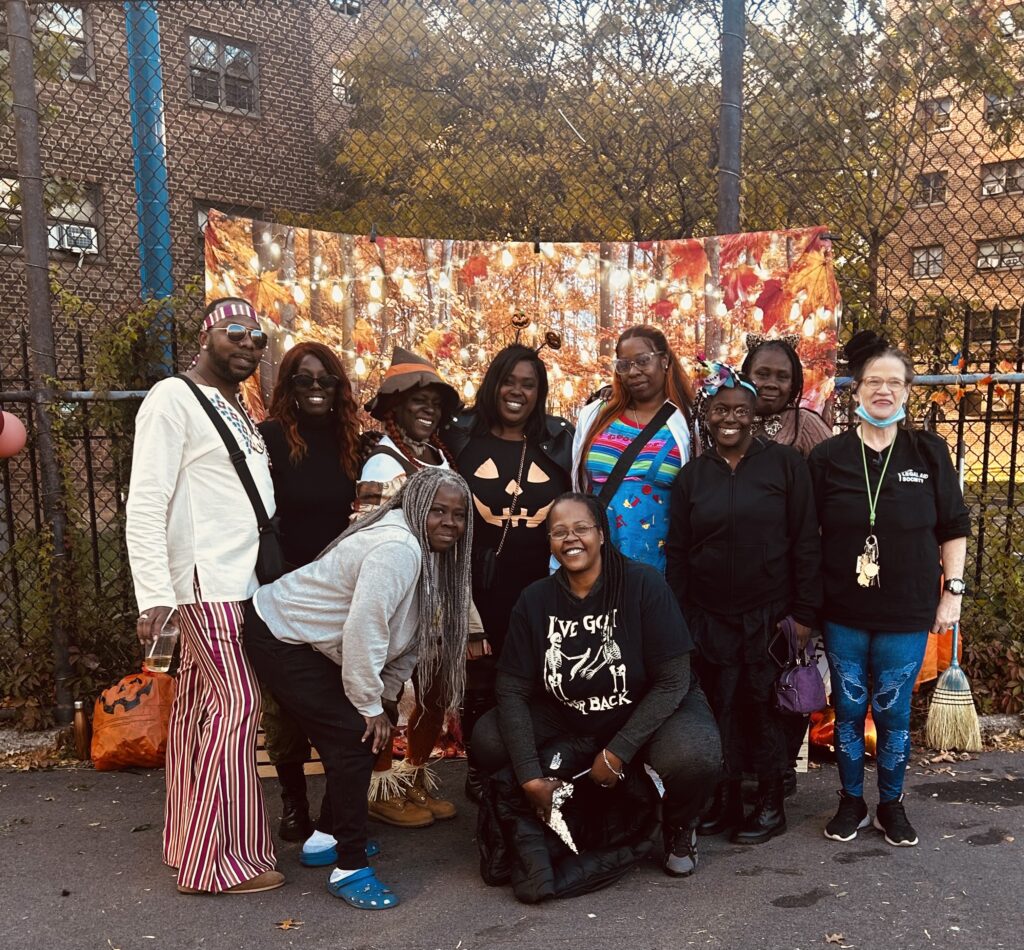
The Hallets Playground Alliance is on a mission to create an inclusive, vibrant community space in the Hallets Point neighborhood, where families and neighbors can come together through health-centered events and social outdoor activities. Founded in April 2023 to address the need for accessible, organized community events, Hallets Playground Alliance has been making a mark by hosting free activities that support physical, mental, and social well-being.
This Fall, the alliance hosted its first Halloween Fair, a festive celebration that brought families together for a day of fun and community spirit. Beyond seasonal events, the group is committed to expanding its programming to foster stronger community ties and promote an active, healthy lifestyle. With plans to formalize as a nonprofit, Hallets Playground Alliance aims to sustain its grassroots efforts, providing free, enriching activities that transform playgrounds into platforms for wellness, leadership, and activism. Donors and community supporters can play a key role in helping Hallets Playground Alliance continue to grow and impact more lives in the neighborhood.
“Parks are for people—they are gathering places where people of all ages and backgrounds can connect, heal, and thrive. Hallets Playground Alliance is committed to making community spaces vibrant, inclusive, and accessible to everyone. With FJC’s support, we’re excited to expand our programming and bring even more enriching events to the families of Hallets Point. Together, we’re strengthening community bonds and creating lasting memories.” – Aiysha Mayfield, Executive Director
CHInyc: Building Inclusive, Supportive Housing for Neurodiverse Adults
CHInyc, or Collective for Housing Independence NYC, is developing an innovative housing model designed to create a meaningful community for neurodiverse adults and their neurotypical neighbors. Inspired by successful intentional housing models, CHInyc envisions a “micro-community” where residents with intellectual and developmental disabilities (I/DD) can live with autonomy and dignity while building genuine social connections.
The planned community will feature private apartments along with flexible common spaces for organic social interactions, helping to reduce the isolation that many people with disabilities experience. A unique aspect of this model is the “paid neighbor” program, in which neurotypical residents receive a small stipend to support and interact with their neurodiverse neighbors, fostering a supportive and inclusive environment. Currently in the initial phases of fundraising and coalition building, CHInyc is working with FJC to establish itself as a nonprofit and acquire real estate to bring this model to life.
This ambitious vision not only addresses a pressing need for supportive housing but also sets the stage for future inclusive communities across NYC. By supporting CHInyc, donors help create a lasting model for dignity, social integration, and independence. An anonymous donor will be matching up to $10,000 of donations made in support of CHInyc, so donating now will double your impact for the organization!
“We started CHInyc because we believe that everyone deserves a home and a community where they are valued. It’s not just about housing—it’s about creating a space for neurodiverse adults to live with dignity and build meaningful relationships. FJC’s support has been incredible, giving us the confidence to take these first steps and share this vision with the world.” – Carrie Peterson, Founder and Director
Attention, FJC Donors: interested in supporting these organizations with your DAF account for Giving Tuesday or your year-end giving? It’s easy for us to make an account-to-account transfer from your FJC DAF account. Simply reach out to FSP Program Administrator Sophia Trombold (Trombold@fjc.org) to authorize the transfer. And keep in mind our year-end deadlines!
Under FJC’s Umbrella, An Orchestra Takes a Step Toward Independence
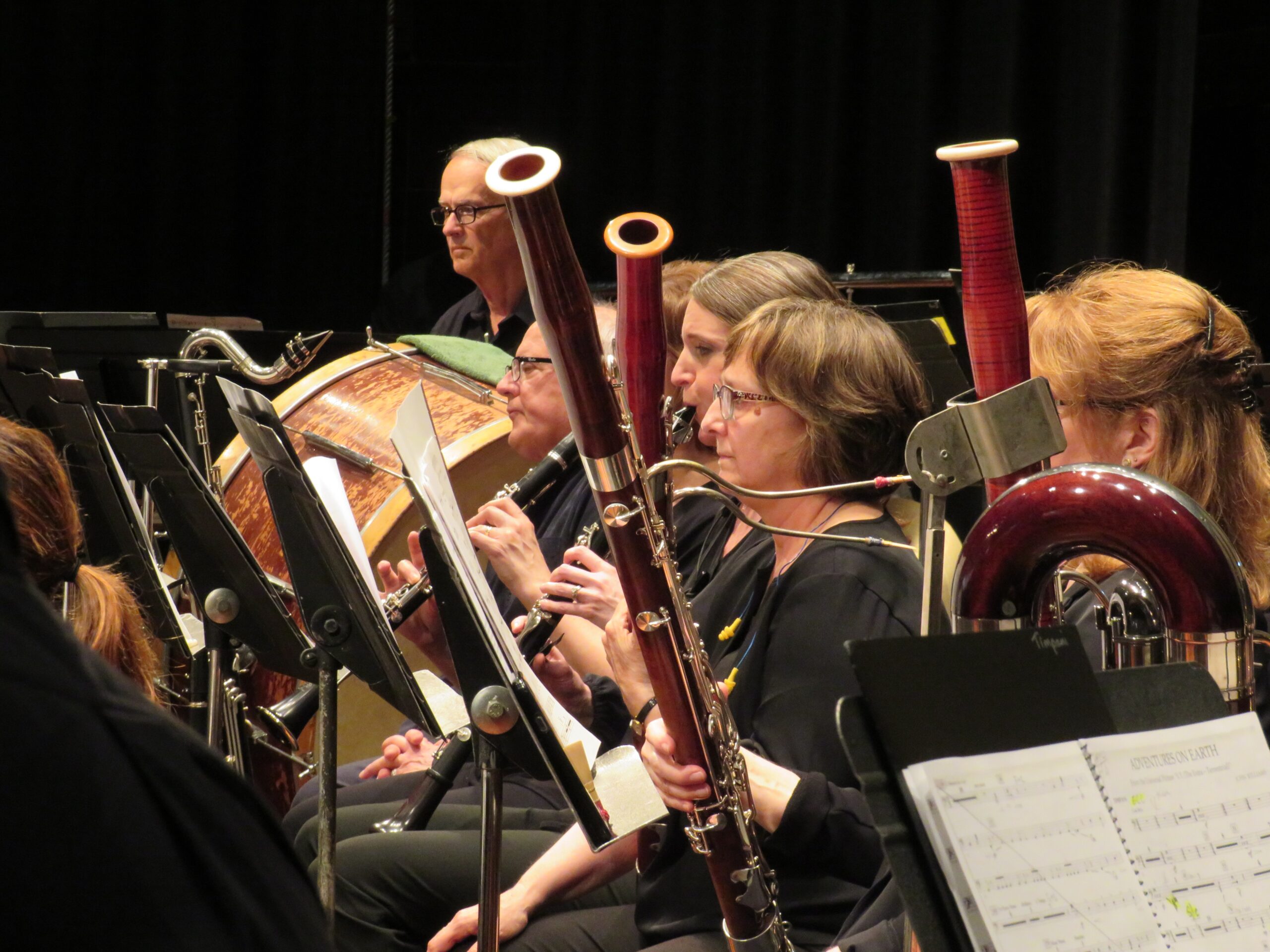
The auditorium of FDR High School was packed full of avid audience members as the Hudson Valley Symphony Orchestra began their inaugural concert last Saturday night. The repertoire was a series of classical soundtracks composed by John Williams, creating a cinematic atmosphere for the crowd of fans and supporters. The symphony, conducted by Andre Raphel, performed music from beloved films like Jurassic Park, Star Wars, Harry Potter, Indiana Jones, and more.
The John Williams program illustrates a core principle of The Hudson Valley Symphony Orchestra: performing modern music that their audience can relate to. The Orchestra first performed over 90 years ago as the Dutchess County Philharmonic Orchestra, and through several organizational changes has managed to maintain their commitment to their Hudson Valley community. The Orchestra has hosted numerous renowned soloists over the years, as well as presenting the winners of the distinguished Hudson Valley Philharmonic String Competition. When they became fully professional in the 1960s as the Hudson Valley Philharmonic, the Orchestra began hosting educational concerts for school children, a tradition that continued until 2018.
“Our inaugural concert last Saturday was a wonderful celebration! It was a happy reunion for all the musicians, and a special evening of collaboration and joyful music-making.”
– Rachel Crozier, Executive Director, Hudson Valley Symphony Orchestra
From 1999 until last year, the group was operated as a program of a local Hudson Valley opera house. As one of many programs operated at the opera house, the Orchestra saw their operations reduced from hosting dozens of concert series and educational events each year to three concerts total. After exhausting all options through negotiation with the opera house, the musicians of the Hudson Valley Philharmonic realized they needed to make a strategic decision to spin off from the opera house and reached out to FJC to pursue Fiscal Sponsorship as an interim step toward becoming fully independent.
When HVSO came to FJC this spring with an ambitious goal of a May 2024 concert date, FJC was able to work quickly to get the Hudson Valley Symphony Orchestra approved as a fiscally sponsored program.
FJC’s approach to Fiscal Sponsorship allows the Hudson Valley Symphony Orchestra musicians to take ownership of their programming while operating under our 501(c)(3) umbrella. Rachel Crozier, a violinist and HVSO’s Executive Director, stated that “a fiscal sponsorship afforded us the time and support to carefully develop our business plan, operations and select a strong board.” As a fiscally sponsored program of FJC, HVSO efficiently launched a website, publicized their event and debuted on Saturday night as a nonprofit organization run by musicians for the benefit of their community.
“We are so grateful to FJC for the opportunity to begin revitalizing our beloved orchestra,” said Crozier. “Our inaugural concert last Saturday was a wonderful celebration! It was a happy reunion for all the musicians, and a special evening of collaboration and joyful music-making.”
For more information about HVSO’s programming, please visit their website.
Special thanks to FJC Program Administrator Sophia Trombold for writing this story.Are you an FJC donor interested in recommending a grant to HVSO? Email us at fjc@fjc.org.
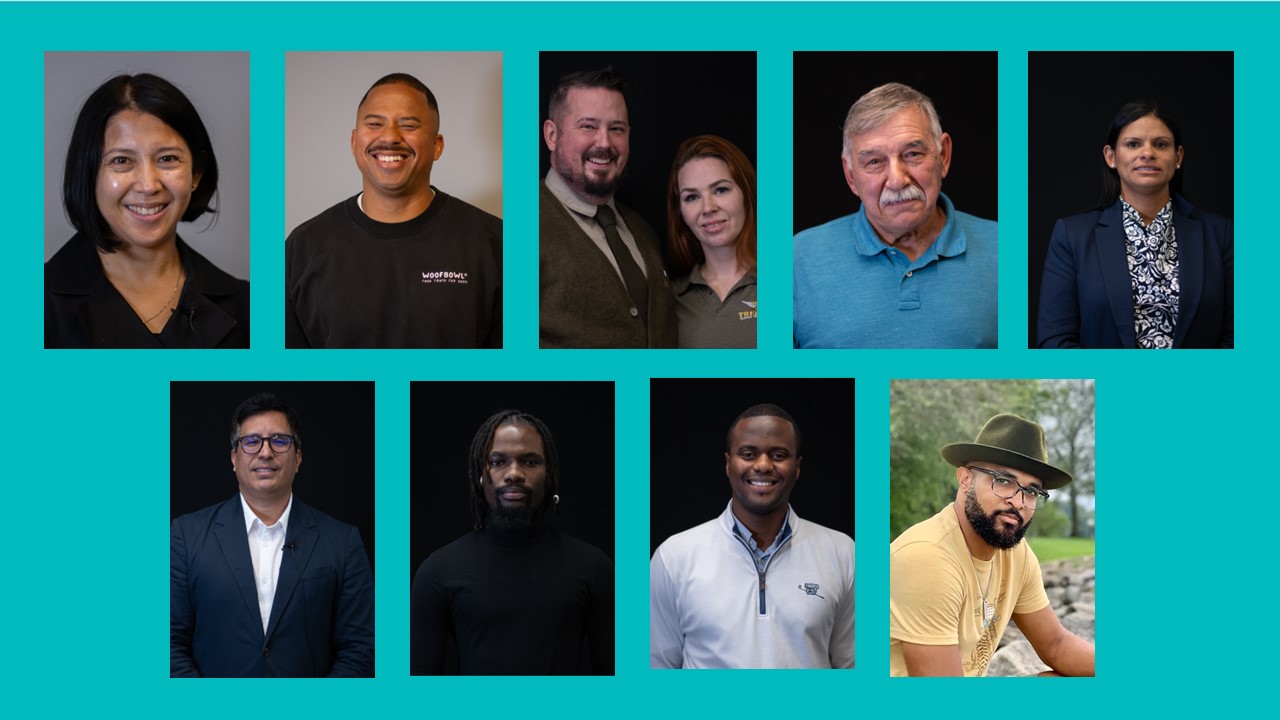
Winners of the Boss Up competition include: (Top Row) Analiza Quiroz Wolf, Women of Color Rise; Ron Holloway, Woofbowl; Nick & Joelle Lynch, Tree ARMY; Dan Rossi – AJM Business Service; Marlin Yinet Santos, Mariachi Mexican Cantina;
(Bottom Row) Sergio Rodriguera, Jr., Straylight Systems; Vance Gorman, Jr., Vanso Visual Imaging; Tsikata Apenyo, indeHealth; Serghio Adams, Brothers Building Blocks. Photos courtesy of Curtis Dorval
Veteran Entrepreneurship Celebrated Through Boss Up Award Program
The nine winners of the NYC Boss Up Veteran Entrepreneurship Program were announced at a ceremony at Gracie Mansion yesterday by James Hendon, Commissioner of the New York City Department of Veterans’ Services (DVS), who was joined on stage by NYC Mayor Eric Adams.
The program is administered through a Scholarship & Award Account at FJC – A Foundation of Philanthropic Funds, with funding by the Ron and Kerry Moelis Foundation, in partnership with DVS and the NYC Department of Small Business Services (SBS). The application process yielded dozens of applicants, and finalists participated in a juried pitch competition. Each winning small business owner will receive a $20,000 grant, and enrollment in SBS’s small business mentorship program to help build and grow their businesses.
NYC Boss Up is a philanthropic program committed to encouraging excellence in entrepreneurship across New York City, and this program follows the successful NYC Boss Up Entrepreneurship Program partnership with the New York City Public Housing Authority (NYCHA) that provides $1 million in grants over five years to budding entrepreneurs living in NYCHA residences.
The winners of the veterans competition are:
Analiza Quiroz Wolf – Women of Color Rise Women of Color Riseis a mission-based organization with the goal of elevating diverse leaders—especially women of color –to positions of power. CEO Analiza Quiroz Wolf served in the U.S. Air Force, attaining the rank of Captain. Analiza intends to use her grant as startup money to expand her organization’s reach.
Ron Holloway – Woofbowl Woofbowl was started as a food truck for neighborhood dogs and has since expanded to work alongside other institutions ranging from the MLB to the Brooklyn Museum in a shared mission of building community. Owner Ron Holloway is an American disabled-Veteran who served in the U.S. Navy from December 2001 through June 2010. Ron plans to use his grant to take Woofbowl nationwide with a new subscription system.
Nick & Joelle Lynch – Tree ARMY Co. Tree ARMY Co.is a Bronx-based tree removal, tree-pruning, planting, and tree-emergency response business that hires transitioning veterans and dependents. Owners Nick and Joelle Lynch both served in the U.S. Army. Nick and Joelle will be investing their grant money in new specialty machinery and equipment that will allow them to hire more Veterans with disabilities.
Dan Rossi – AJM Business Service, Inc. AJM Business Service, Inc. is a food vending service once described by the New York Times as “the New York Hot Dog King.” Owner Dan Rossi is a service-disabled Veteran of two tours of duty in Vietnam with the U.S. Marine Corps. Dan will use his grant to build a new cart with all-new “Hot Dog King” branding.
Marlin Yinet Santos – Mariachi Mexican Cantina Mariachi Mexican Cantina is California-style Mexican restaurant on Staten Island. Owner Marlin Yinet Santos served in the U.S. Army, including a yearlong tour of duty in Iraq. Marlin will use her grant money to purchase a conference bike that will allow her to bring customers directly to her business from the Staten Island Ferry while also giving historical tours of Staten Island’ North Shore.
Sergio Rodriguera, Jr. – Straylight Systems Straylight Systemsis an artificial intelligence company that helps commercial and government entities operationalize data by analyzing thousands of disparate information streams across various file types. Co-Founder Sergio Rodriguera, Jr., served in the U.S Navy as a Naval Intelligence Officer. Sergio will use his grant as seed money to foster additional growth and service more customers.
Vance Gorman, Jr. – Vanso Visual Imaging Vanso Visual Imagingis portrait photography studio and design service. Owner Vance Gorman, Jr., served in the U.S. Marine Corps. Vance is planning to use his grant to scale up his studio and expand.
Tsikata Apenyo – indeHealth provides a comprehensive healthcare management platform that functions as an intermediary between students and university campuses. Owner Tsiktata Apenyo served as a Fulbright Fellow in China, and as a Medical Corps officer in the U.S. Army. Tsikata will use his grant to scale up his business operations after recently securing a contract with Yale.
Serghio Adams – Brothers Building Blocks Brothers Building Blocksis a cohort-based educational enrichment program designed to empower youth and promote interest in STEM career paths. Founder Serghio Adams served in the U.S. Army and was stationed in Seoul, South Korea. Serghio plans to use his grant to expand his business’ after school curriculum and reach more mostly BIPOC students in LMI communities.
“FJC is thrilled to be helping expand the groundbreaking NYC Boss Up program to provide philanthropic awards to these dynamic veteran entrepreneurs,” said Sam Marks, Chief Executive Officer of FJC. “Programs like NYC Boss Up epitomize the best of philanthropy in bridging the gap between imaginative donors and powerful community partnerships. By bringing together government agencies, nonprofits, and private philanthropy around a common goal we are delivering vital new support to New York City’s veterans.”
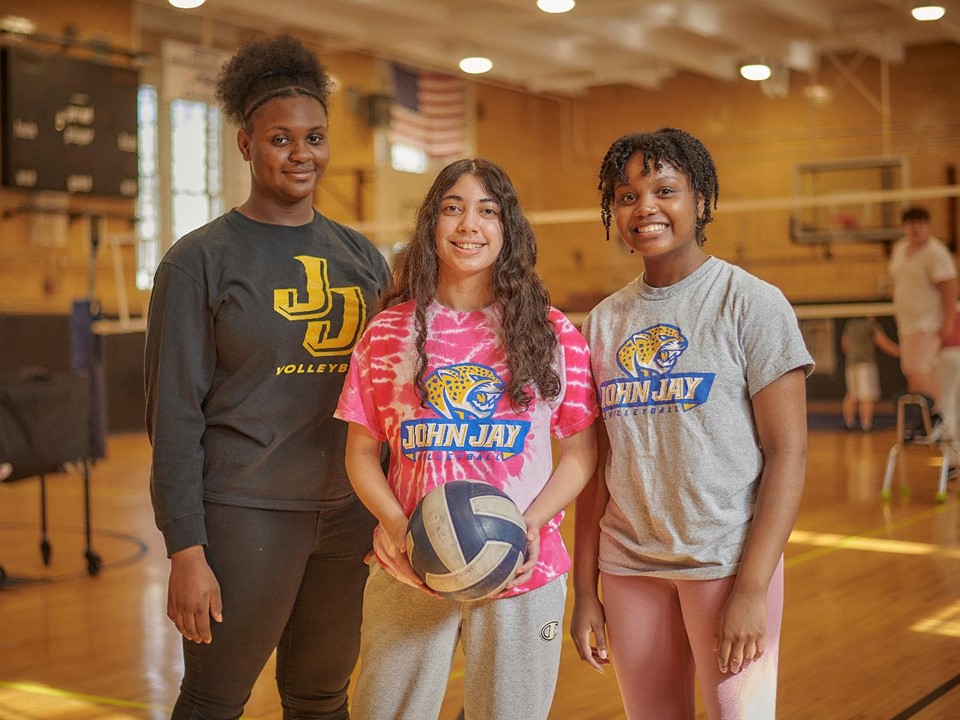
Students at the John Jay Education Complex: Lauren Valme, Maya Velasquez, Mariah Morgan. Photo courtesy of The Bell.
Keeping Score: A Podcast Amplifies Student Voices
In Park Slope, Brooklyn, high school students at The John Jay Educational Campus are grappling with the decision to unite a school building divided by race, class, and opportunity, through sports. With help from student journalism nonprofit The Bell, a fiscally sponsored program at FJC, these students created a podcast called Keeping Score to tell this story to the wider public.
New York City has one of the most segregated public-school systems in the country, despite its diversity and cultural vibrancy. At times, this racial and cultural division can be expressed in a single school building. The John Jay Educational Campus houses four public high schools: Cyberarts Studio Academy, the Secondary School for Law, Millennium Brooklyn, and Park Slope Collegiate. If you visit the campus today, you might see banners rooting for the John Jay Jaguars with the slogan “We Are One” adorning the hallways. However, for more than a decade, the building was home to two sports teams: the Jayhawks, comprised of mostly Black and Latinx students from Cyberarts Studio Academy, the Secondary School for Law, and Park Slope Collegiate; and the Phoenixes, made up of predominantly White and Asian Millennium Brooklyn students.
The Bell seeks to bridge the gap between students from underrepresented backgrounds and journalism opportunities in NYC.
Millennium Brooklyn moved into the John Jay Educational Campus in 2011, but with rivaling sports teams and each school located on a different floor, students found it difficult to connect with peers. A decade later, after years of students yearning to unite their divided building, school administrators decided to merge the two sports teams into one: the John Jay Jaguars. The Bell caught wind of the merger as it was happening and knew this story had to be told.
The Bell teamed up with WNYC Studios to help students from the John Jay Educational Campus report on the merger as it played out on the girls’ volleyball court. Keeping Score provided students with a platform to discuss how their high school experience fits into the broader picture of race and class in America. Mariah Morgan, a junior at Park Slope Collegiate who helped advocate for and report on the merger says, “I want this to work, I really do, because it has the potential to be incredibly anti-racist.”
The Bell hopes to follow up with John Jay students on how Year 2 of the merger continues to influence a dialogue amongst the campus community.
The Bell has been a participant in FJC’s Fiscal Sponsorship Program since 2018. Co-founder Taylor McGraw says working with FJC gives him “peace of mind knowing that we have a strong backbone.” Having FJC as a partner who can receive tax-exempt grants and manage payment mechanics allows The Bell to focus on its mission: equipping students with the skills, connections, know-how, and savvy needed in journalism.
“I think this is the best team I’ve ever been a part of. Like, being able to be friends and voice your opinions and experiences and fighting for a common cause…I think the common cause is not only winning but also making sure everyone is welcome, everyone is heard, and that we’re being an anti-racist team.”
Nina Walter Vaz, a freshman at Millennium Brooklyn describes her experience being on the John Jay Jaguars girls’ volleyball team
The Bell seeks to bridge the gap between students from underrepresented backgrounds and journalism opportunities in NYC. The organization currently offers internships to 30 NYC public high school students a year, and co-founder Taylor McGraw aspires to become the best audio journalism training program in the world. With the launch of a NYC youth journalism coalition in the works, The Bell hopes to connect more high school students with a cross-sector group of media professionals, outlets, and schools. The Bell encourages anyone with interest or experience in journalism, media, education, and equal opportunities for young people, to reach out for more ways to help.
If you would like to support The Bell’s student journalism programs, donate here and follow them on Twitter, Facebook, and Instagram.
Special thanks to Natalie Cimino, FJC Program Assistant, for writing this story.
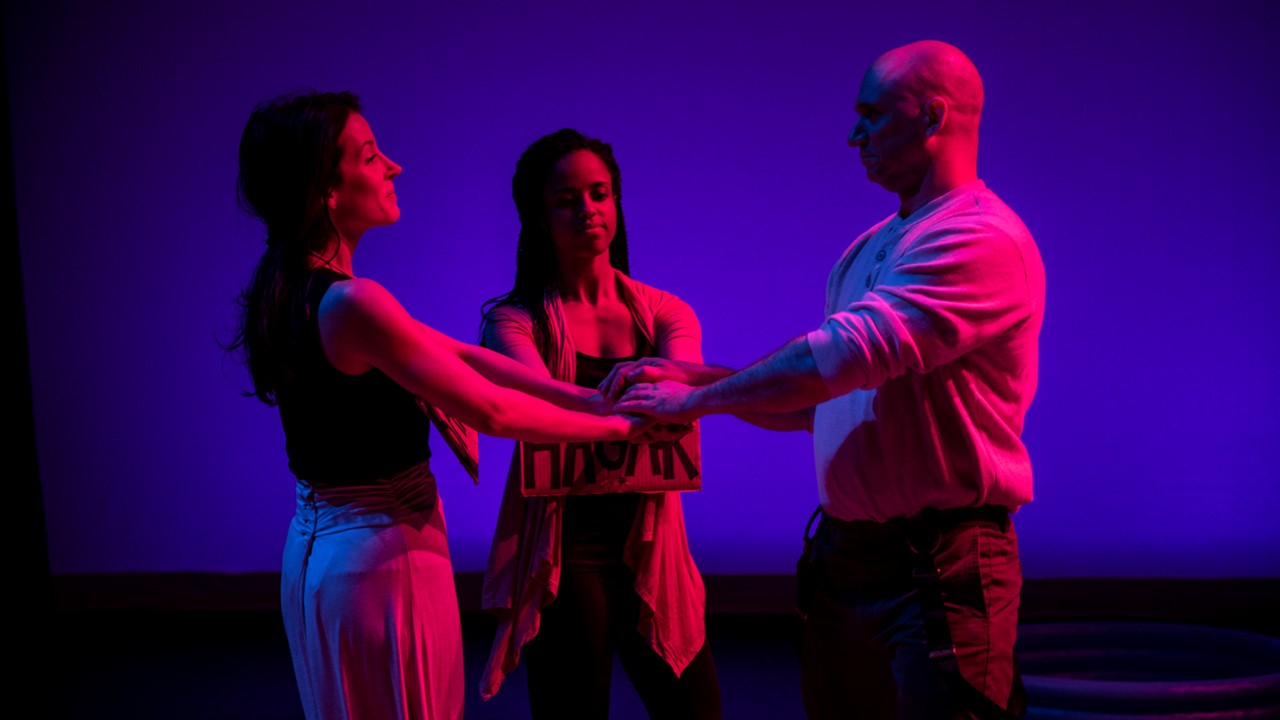
Photo credit Maria Baranova, courtesy The In[HEIR]itance Project
Incubating, and then Financing, a Growing Nonprofit Theater
This summer, FJC closed a $50,000 loan to the nonprofit The In[Heir]itance Project, to assist the theater organization’s growth while it waited for committed foundation grants to be paid. The loan represented a satisfying “second act” in the relationship between FJC and the nonprofit, which had previously been incubated at FJC as a fiscally sponsored project.
“It’s always great when one of the programs that ‘graduates’ from FJC’s fiscal sponsorship can become one of our borrowers,” says Laura Hoffman, Program Manager of FJC’s Fiscal Sponsorship Program.
“Our organization wouldn’t exist today without the mentorship, guidance, and incubation time we received from FJC when it served as our fiscal sponsor. Having [the lending] relationship endure after we left the nest is not only reassuring, it’s an exciting next step in our maturation as an organization.”
Jon Adam Ross, Co-Founding Artist & Executive Director
The In[HEIR]itance Project works with intergenerational, intersectional, and interfaith communities to build relationships across divides through collaborative theater projects inspired by shared cultural touchstones. They are currently beginning work in Memphis on the fifth play in a series exploring Exodus narratives across the United States. Previous stops in the playmaking series included projects in Harlem, NYC working with formerly incarcerated New Yorkers, Omaha working with recently resettled refugees, Cincinnati working with the Black and Jewish communities to explore the rituals of Exodus (resulting in a Juneteenth Seder ritual performance), and in Coastal Virginia exploring displacement and white flight.
Hoffman recalls that Co-Founding Artist and Executive Director Jon Adam Ross joined FJC’s fiscal sponsorship program in 2015. The initial proposal projected a three-year initial project of modest ambition. (The original budget was $50,000 per year). During its period as a fiscally sponsored project, FJC acted as the 501(c)(3), receiving charitable contributions on the organization’s behalf and acting as a fiscal back office.
Over time the organization grew into a national arts organization of artists, scholars and activists that could bring people together to listen, learn and collaborate to create theater. Since beginning operation in January of 2015, In[HEIR]itance Project artists have led projects in over a dozen cities around the country, engaging over 10,000 community participants, paying over 170 local artists, and partnering with more than 400 partnering organizations, institutions, and schools. The In[HEIR]itance Project received its 501(c)(3) status in 2020, and it has been operating independently since.
“It’s always great when one of the programs that ‘graduates’ from FJC’s fiscal sponsorship can become one of our borrowers.”
Laura Hoffman, Program Director, Fiscal Sponsorship Program, FJC
The loan came at a critical time for the organization. In the summer of 2020, the pandemic, along with the national awakening that occurred in response to the murder of George Floyd, created a surge in demand from community partners for collaborations with the In[Heir]itance Project. The organization has a 27-city waiting list of project inquiries, and they have had to scale up quickly while maintaining the high quality of their collaborations and productions. With philanthropic commitments in hand but payments expected later in the year, the organization was in need of some working capital to bridge the timing gap. FJC made the bridge loan from its Agency Loan Fund, an impact investment vehicle that pools together funds from donor accounts and makes loans to nonprofits.
“Our organization wouldn’t exist today without the mentorship, guidance, and incubation time we received from FJC when it served as our fiscal sponsor,” says Ross. “Having that relationship endure after we left the nest is not only reassuring, it’s an exciting next step in our maturation as an organization. And we are so grateful.”
Welcome to FJC
It looks like you are using Internet Explorer.
To take advantage of all of the features on the FJC site we suggest using Chrome, Safari, Firefox or MicrosoftEdge.